
1. Borrowed Access
The invitation didn’t arrive with fanfare. No glossy envelope. No dramatic buildup. Just a phone call, late in the day, while I was in Washington, D.C., wearing my Canadian Biogas Association Chairman’s hat. Deep in meetings about the International Marine Organization Net Zero Framework and how biogas can contribute to global Scope 3 emissions shipping goods including food around the globe. We were Founders forming the United Biogas Alliance when the phone rang.
Steven James called. Originally from Lacombe, he started with Frito-Lay Taber in the early 2000s and has since moved up the ladder to become Senior Director of Potatoes for PepsiCo North America. A great guy who appreciates Perry Family Farm’s values. He didn’t oversell it. In fact, he almost undersold it. “There’s been some conversation since New York,” he said. “About bringing farmers into Davos. Not speaking for farmers but actually having farmers in the room. Your name came up. Jim thought of you first.”
I remember pausing. Davos? As in the Forum in Switzerland? He laughed. “Yes. That Davos.”
2026 World Economic Forum, themed:
“The Spirit of Dialogue”
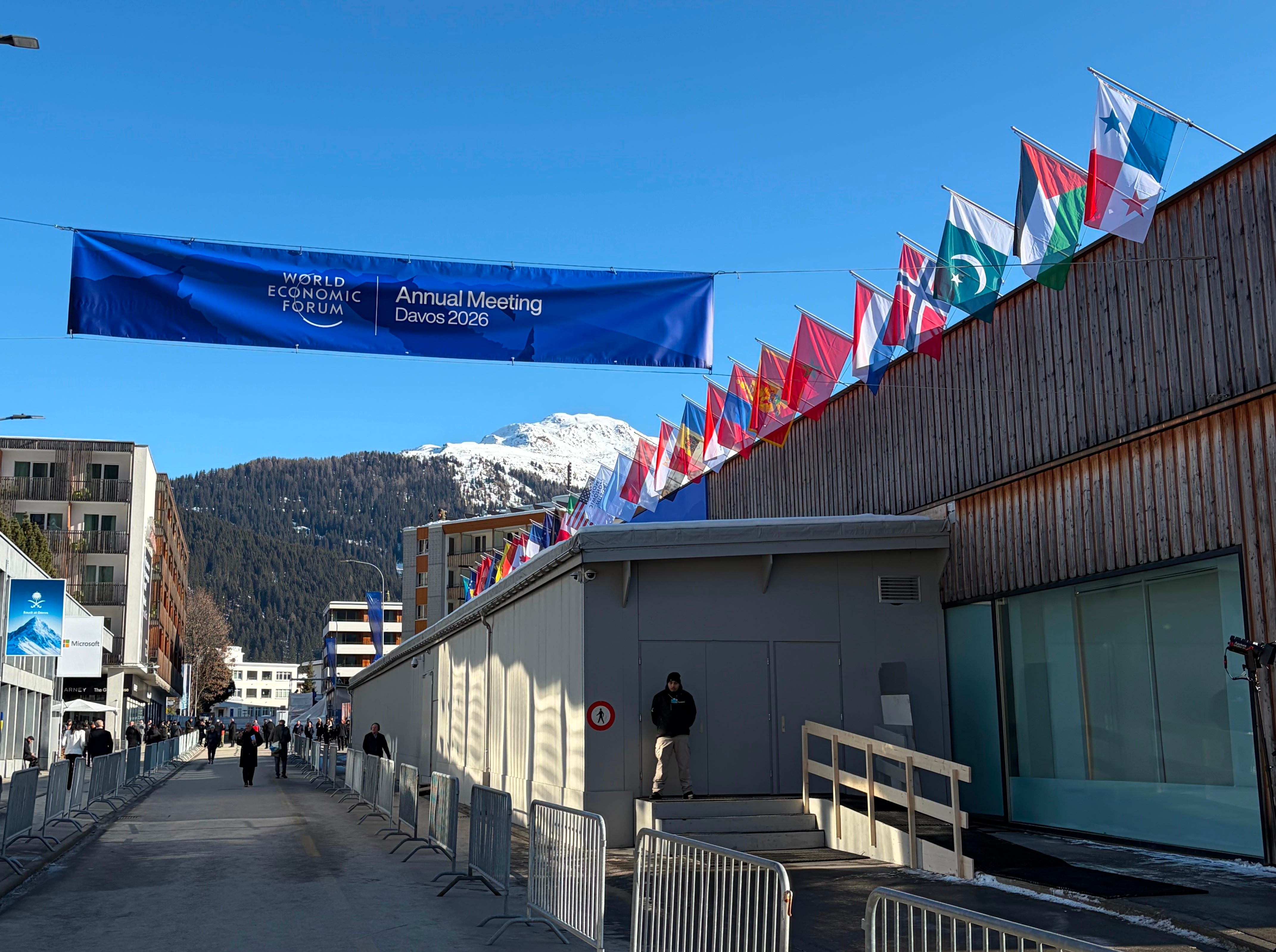
It landed heavier than I expected. Davos—a Swiss village synonymous with the World Economic Forum conference it hosts each year—isn’t something regular people plan for. Not a normal bucket list goal. It’s a place that exists in headlines and abstractions, a meeting on the largest scale humans have come up with. A place for presidents. CEOs. Power brokers. Not potato farmers from Chin, Alberta. But the context mattered.
Just weeks earlier, our farm had been named PepsiCo Foods Global Farmer of the Year, following our first-ever North America Potato Supplier of the Year award for the 2024 crop. That recognition wasn’t about one thing. It was about a matrix of performance: quality delivery, Pep+ alignment, sustainability practices, low-carbon production, and digital compliance. Data-driven agriculture mattered. Regenerative practice mattered. Outcomes mattered.
Behind all of it sat a 45-year relationship with our favorite customer, PepsiCo Frito-Lay. A relationship built not on fiscal quarters, but on generations. On trust. On shared investment. On showing up year after year and doing the work.
Steven framed the call carefully. This would be a commitment. Time. Energy. Focus. Not our standard realm of work on the farm. I didn’t hesitate long. It was a flattering invite, sure, but also a chance to do more, on a bigger scale. To make core memories and come home with stories and lessons to share. I said yes.
2. Before Davos, a Seed was Planted
The Davos invitation didn’t come out of nowhere. It was seeded in New York. In October, PepsiCo brought together 60 farmers from more than 20 countries for its first ever Global Farmer Awards at their headquarters in Purchase, New York. It was unprecedented. A statement. An intentional investment in the people at the very beginning of the food system.
Harold and I were there with Kyra and Jill. Harvest was wrapping up back home, our busiest stretch of the year. Late August through mid-October is when everything converges. Long days. Full crews. Machines running. Potatoes coming out of the ground and getting hauled into storage. It’s exhausting and deeply rewarding all at once. My favorite holiday of the year is Thanksgiving, celebrating the people that matter and the harvest. Canadian Thanksgiving lands at just that time. You put the year behind you. You winterize equipment. You breathe again. And then, finally, you lift your head and look forward. This year, Kyra, Harold, Jill and I were lucky enough to be touching down at JFK, then heading upstate for an Awards Gala.
Harold arrived with hardware. He’d broken his leg badly on the first Saturday of harvest. Castle Mountain. Huckleberry Fest. 3 Plates and 23 screws holding his skeleton together.
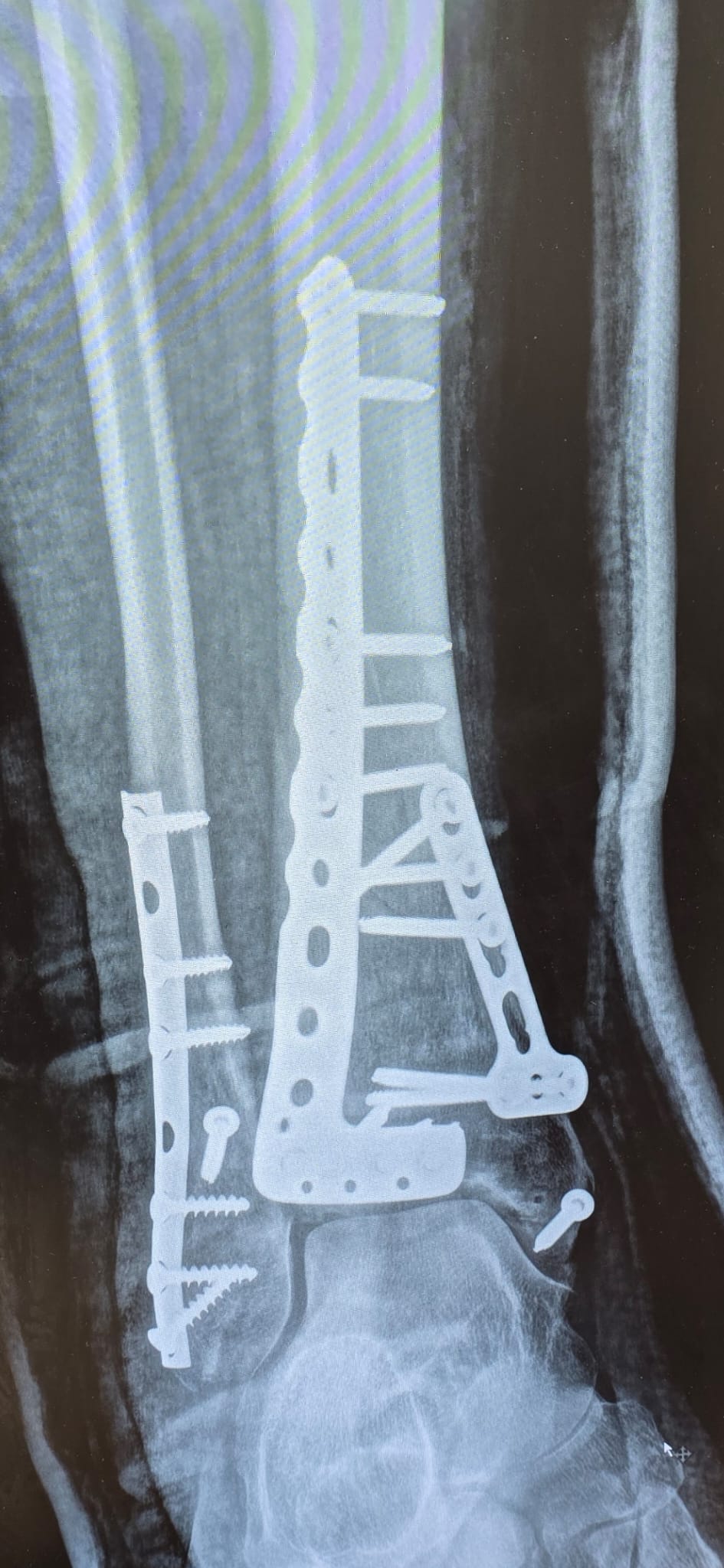
I was so impressed and excited about the timing of this incapacitating injury, given we were heading into the busiest, most full-on time of our year, about to lead crews through 14-hour days for 6 weeks. No biggie! Perhaps a little less forgiving than a coworking brother might be, I dished out healthy doses of sibling shit, and life, along with harvest season, went on. When it came time to head to PepsiCo’s Award Gala, Kyra, Harold, Jill and I packed our bags to go represent the Farm.
The partners of us dumb, stubborn farmers put up with us and our difficulties all the time, those of us who know Harold and Jill well - and to know H is love him - let’s just say we appreciate Jill being a little extra. We touched down in New York, in a place renowned for fast-paced action. This was a cannot miss opportunity for sure, so Jill—in her element as an occupational therapist spouse had a class A scooter ready for H when we landed, plus crutches and a personal aide to help Harold navigate and help navigate Harold in NYC! He drew attention from all, as one does with a bulky scooter, crutches, fine farmer hat and Harold’s famous smile.
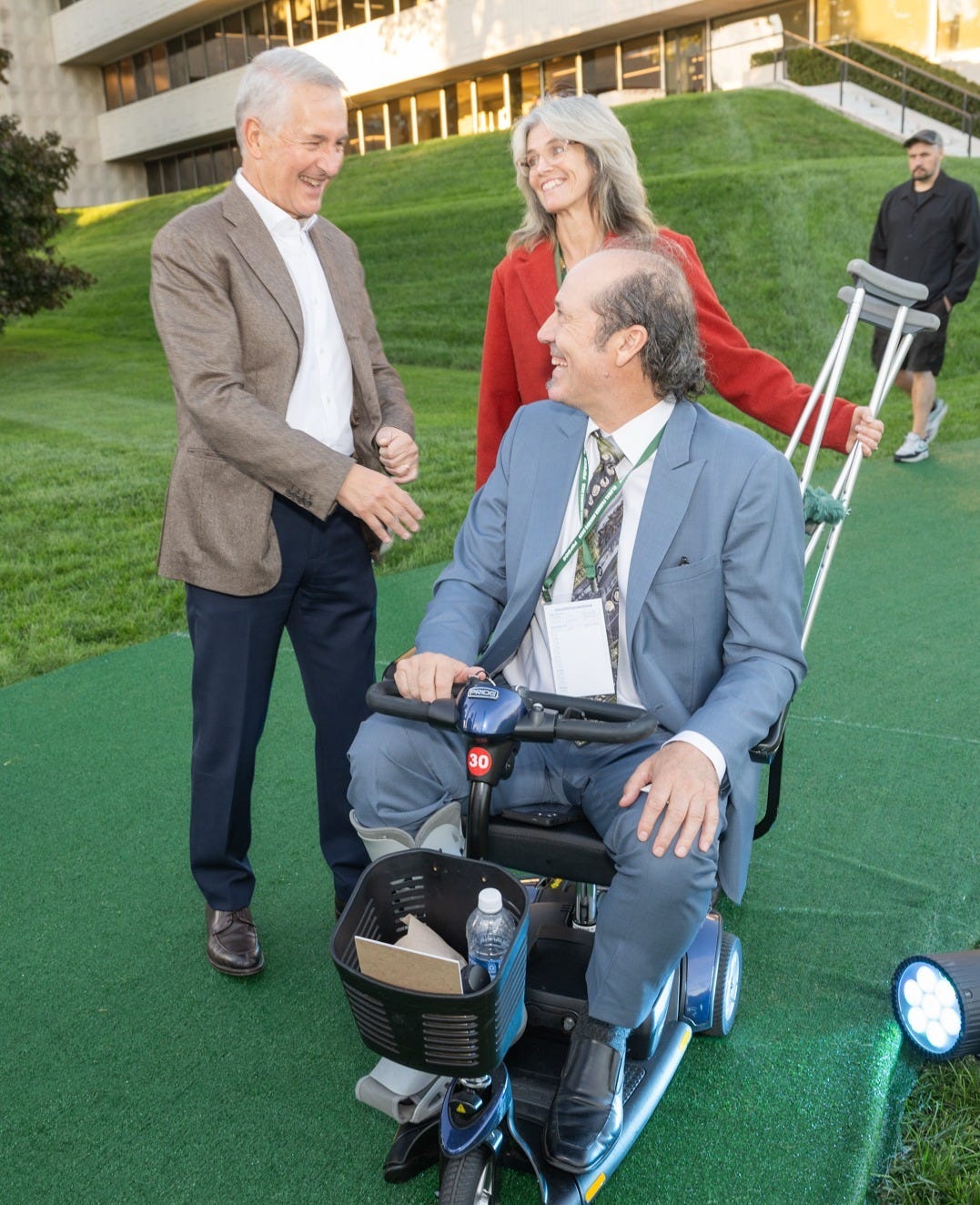
Sure, I get a little jealous and frustrated at times, being the business development guy on the farm, dealing with bankers, accounting, blockchain and biogas – ho hum stuff. Meanwhile, H draws people in with his passion for compost. As he likes to say, “it all starts with poo!” Soil health, biology, and bugs. He just makes fun. He’s a classic likeable character, life’s a party and Harold is hosting, and Jill is the perfect complement, doing her thing.
We were nominated for PepsiCo’s Farmer of the Year by Steven and Fabrizzio, aka Fab, Steven James’ right hand man. Fab is a fan of our farm, Spud Day, GrowTEC and crew. Steven once brought a few PepsiCo folk, including Fab and his musical Brazilian accent and serious guitar skills to one of our farmer jam sessions in the grain bin. We received a “Farmer Award Passport” that described in detail all 60 farms nominated for different categories. It included where each farm was from, why they were nominated and what they did. After reading this and noting our competition in the “Global
Farmer of the Year” category, the BIG prize of the night, I honestly thought there was absolutely no way that was happening. But then as we made our way into the Gala, Steven James introduced us to Ramon Laguarta, PepsiCo CEO, and his wife Maria for the first time. Steven made sure to get group photos captured in a certain way, and then we learned we were sitting at their table front and center by the stage. That was the first time I thought, okay maybe we did win, but I was still not convinced until Ramon started talking about the award and our Perry Farm’s activities. Harold was right, it all starts with poo, and the holy shit moment played out. They called our name and we made it on stage, hobbling and smiling, hardware and all.
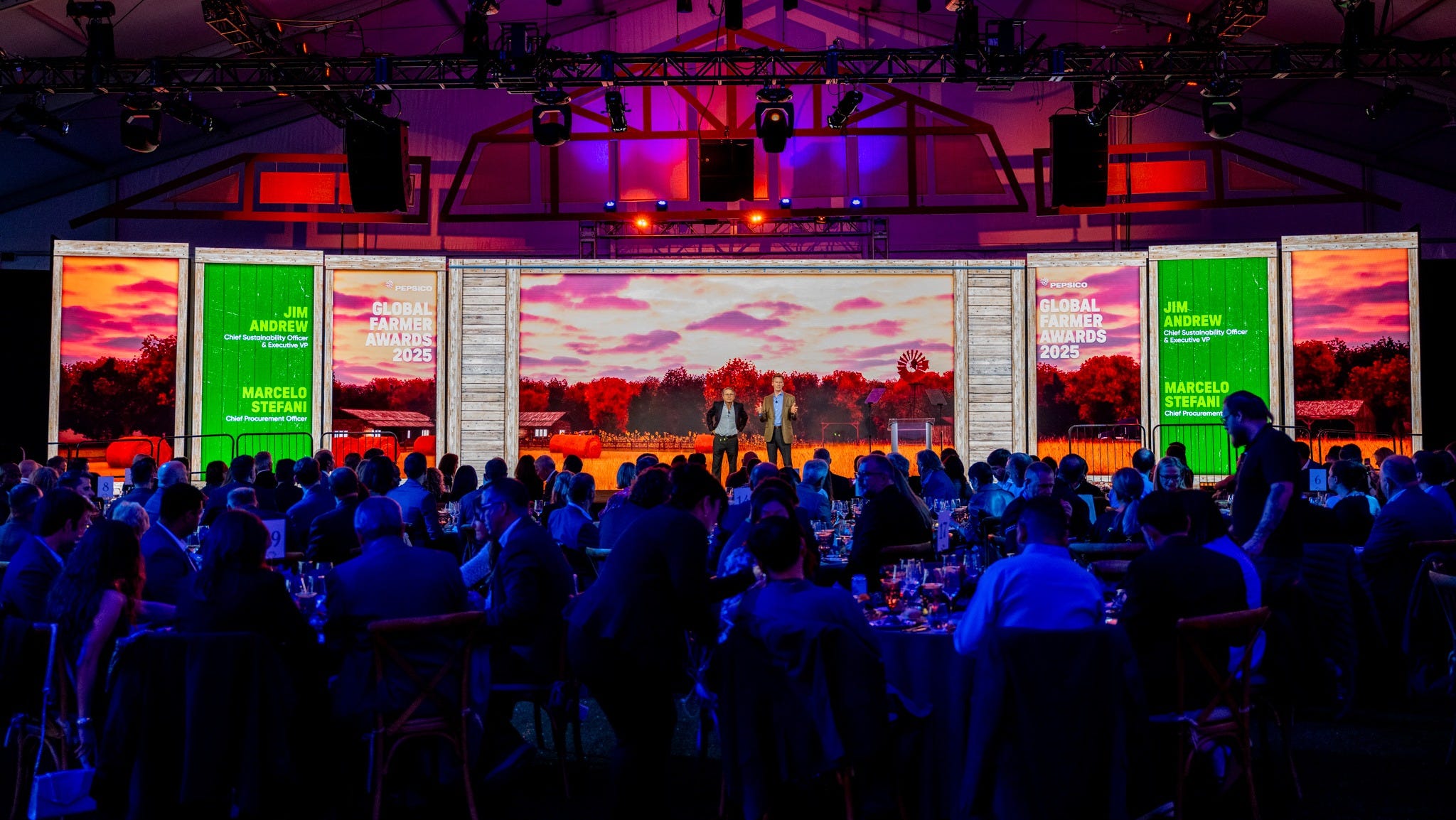
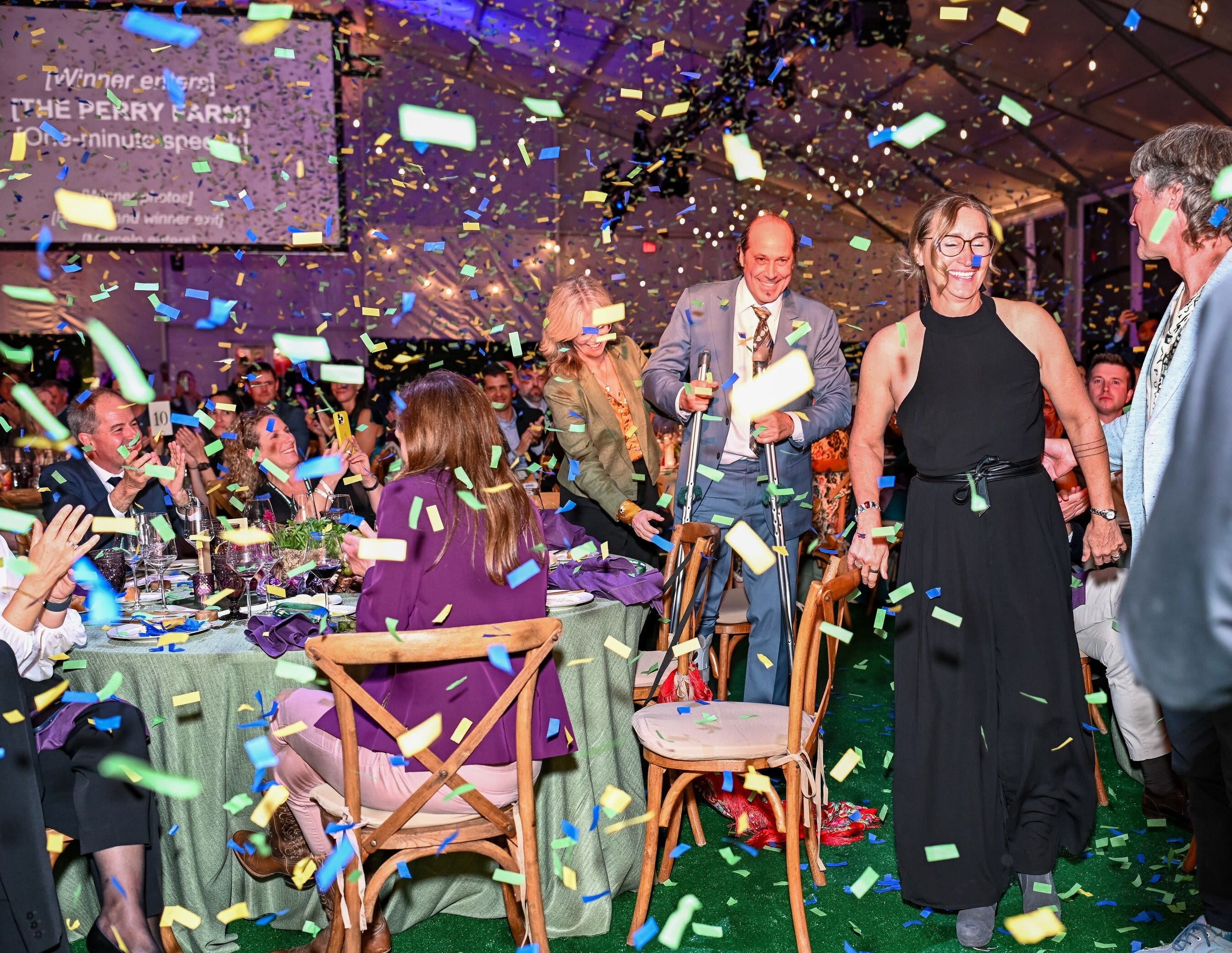
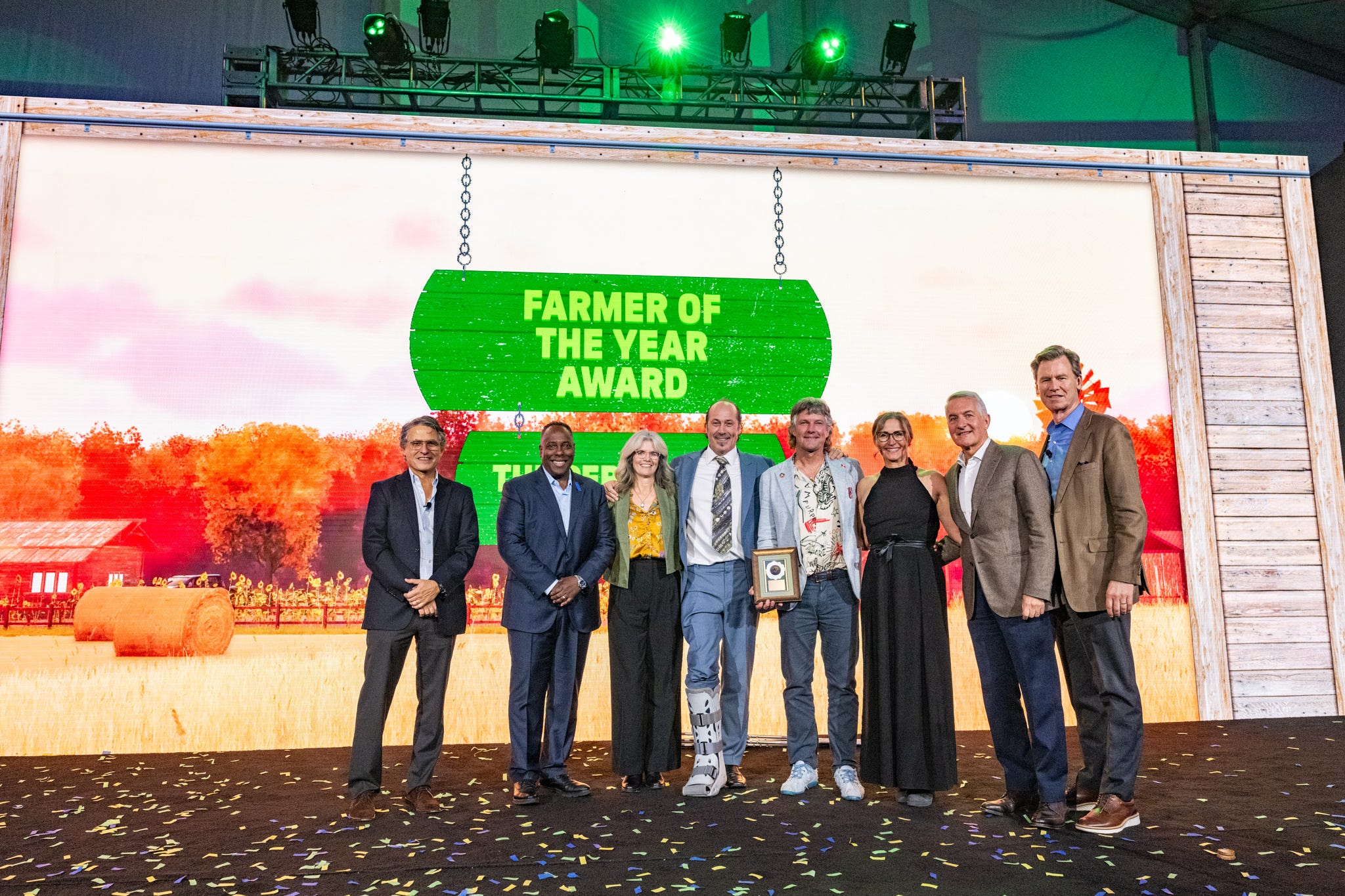
Inaugural PepsiCo Global Farmer Award
PepsiCo did it right. Not just the awards, but the intent behind them. Ramon and his wife Maria are wonderful. Maria may in fact be the “farmer whisperer” behind the idea for the Farmer Awards in New York and a helpful vote for the farmer inclusion in Davos. Jim Andrew, PepsiCo Chief Sustainability Officer (CSO), and Marcelo Stefani, PepsiCo’s Chief Operating Officer/Chief Supply Chain, oversaw and emceed the New York Farmer Awards Event. We sat with Margaret Henry, VP, Sustainable & Regenerative Agriculture. Conversation flowed. When discussing how healthy soil biology correlates to healthy gut biomes, no one is more enthusiastic than Harold, but he may have met an equal in Margaret.
There were business sessions the following morning. Steven James arranged a requested meeting with us and Burgess Davis, Senior VP, Chief Sustainability Officer PepsiCo North America, to talk about several potentials: Perry Farm biogas circularity partnerships, opportunities around scope 3 emissions, progressive regen ag concepts, modular data centers powered by biogas from our and PepsiCo’s food waste, fueling AI opportunities for Data Driven Ag, and biogenic CO2 from biogas a potential ingredient for their soda. A whole chapter worth of ideas and fun really. But back to the Farmer event, it simply was an authentic investment in the farmer relationship, showing sincere appreciation and investment in the farmer partnership that is being valued today. Kudos to PepsiCo for taking a lead on this!
Following the business meeting and awards evening, PepsiCo treat us to a New York City tour. There was an evening cruise with dinner on the water, sailing around Manhattan. The Statue of Liberty at sunset, and a highlight of a group picture waterside with the legacy PepsiCo sign in the background.
Farmers trading stories from every corner of the world. What struck me most was how real it felt. PepsiCo wasn’t just celebrating outcomes. They were celebrating people. Legacy. The long game. Fourth-generation farms. Risk taken. Equity passed down. Crew members who make it all work when no one is watching. That context mattered later. Davos wasn’t a reward. It was an extension of trust.
There was talk of the next day’s “No Kings Day” march in Times Square. Sensible advice suggested non-U.S. citizens might avoid it. Somehow, Harold and Jill found themselves in the middle of it anyway, scooter and all.
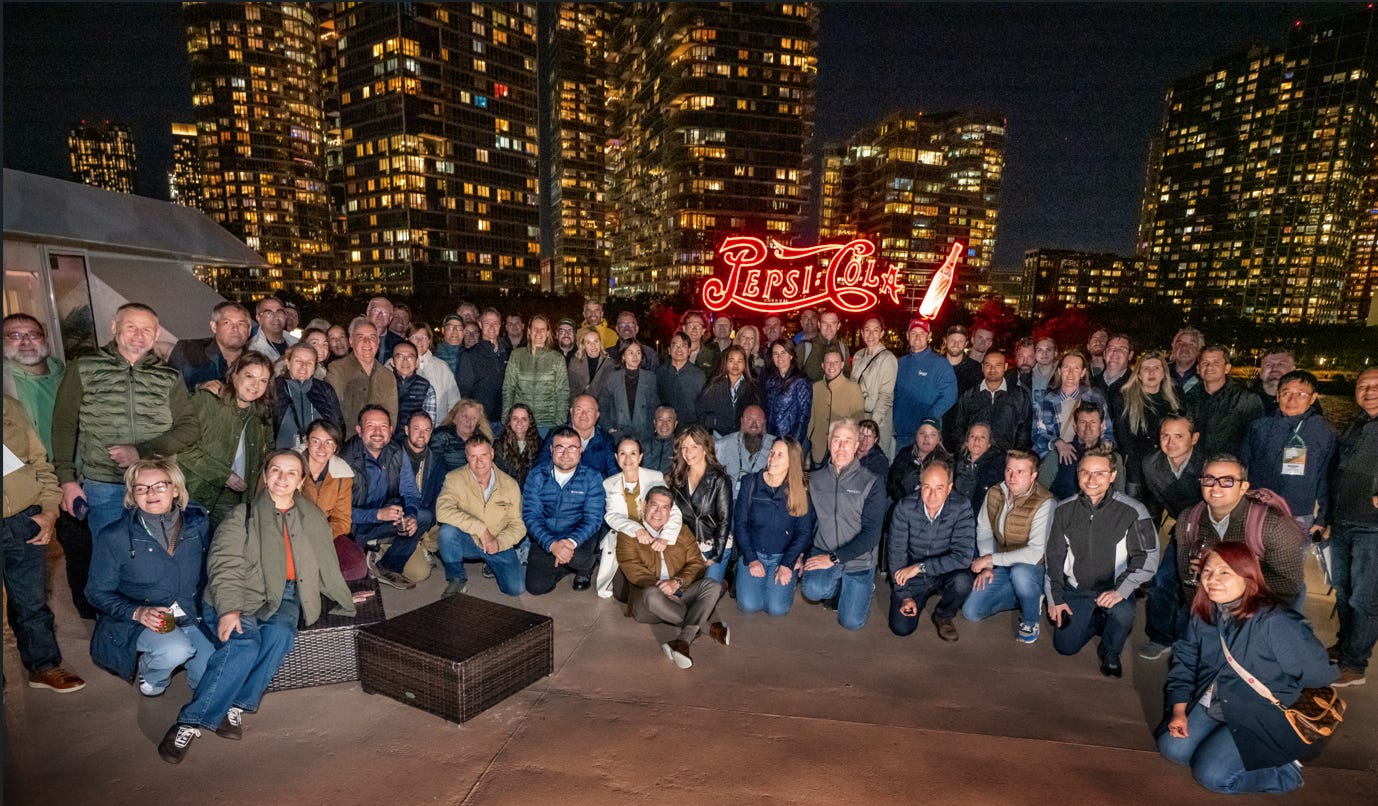
Farmer Sunset Cruise - Inaugural PepsiCo Global Farmer Awards
3. Stewardship Over Glory
There was another moment that mattered. After my initial invitation to attend and participate in the Davos Farmer Breakfast. Caroline Berson, VP, PepsiCo Govt Relations who helped organize the farmer events in Davos asked a straightforward question: “As a farmer, what key problem sets do you think we should work through in Davos? Broadly relevant. Things corporates and civil society could weigh in on. What do you want to explore while you’re there?”
It wasn’t a casual ask. It was an opening.
I went back to the farm and thought about it seriously. I responded with an email that, in hindsight, shifted the trajectory of my week. I told her how genuinely honoured I was to join PepsiCo at Davos. That this meant something to my family and our team at Perry Family Farm and GrowTEC. That a multi-decade partnership had shaped multiple generations on our farm and allowed us to grow, innovate, and think with more interdisciplinarity over time. But then I moved beyond gratitude. I wrote that I see food through a systems lens. Soil. Energy. Data. Logistics. Incentives. Policy. Trust. Davos felt like the one place those threads could be woven together in a single conversation.
I outlined five themes I hoped to bring into the room:
Theme 1. Soil health as the foundation of everything.
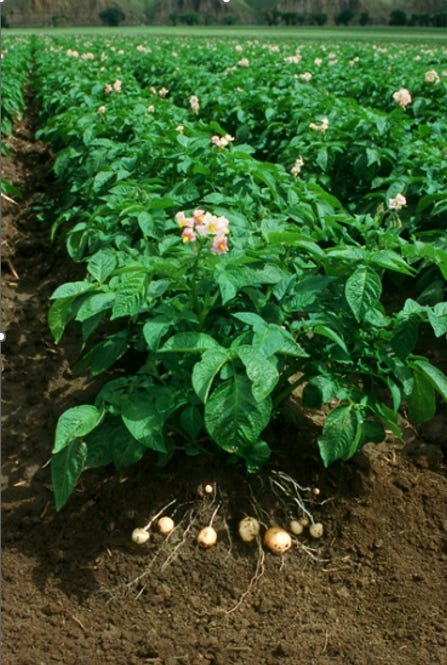
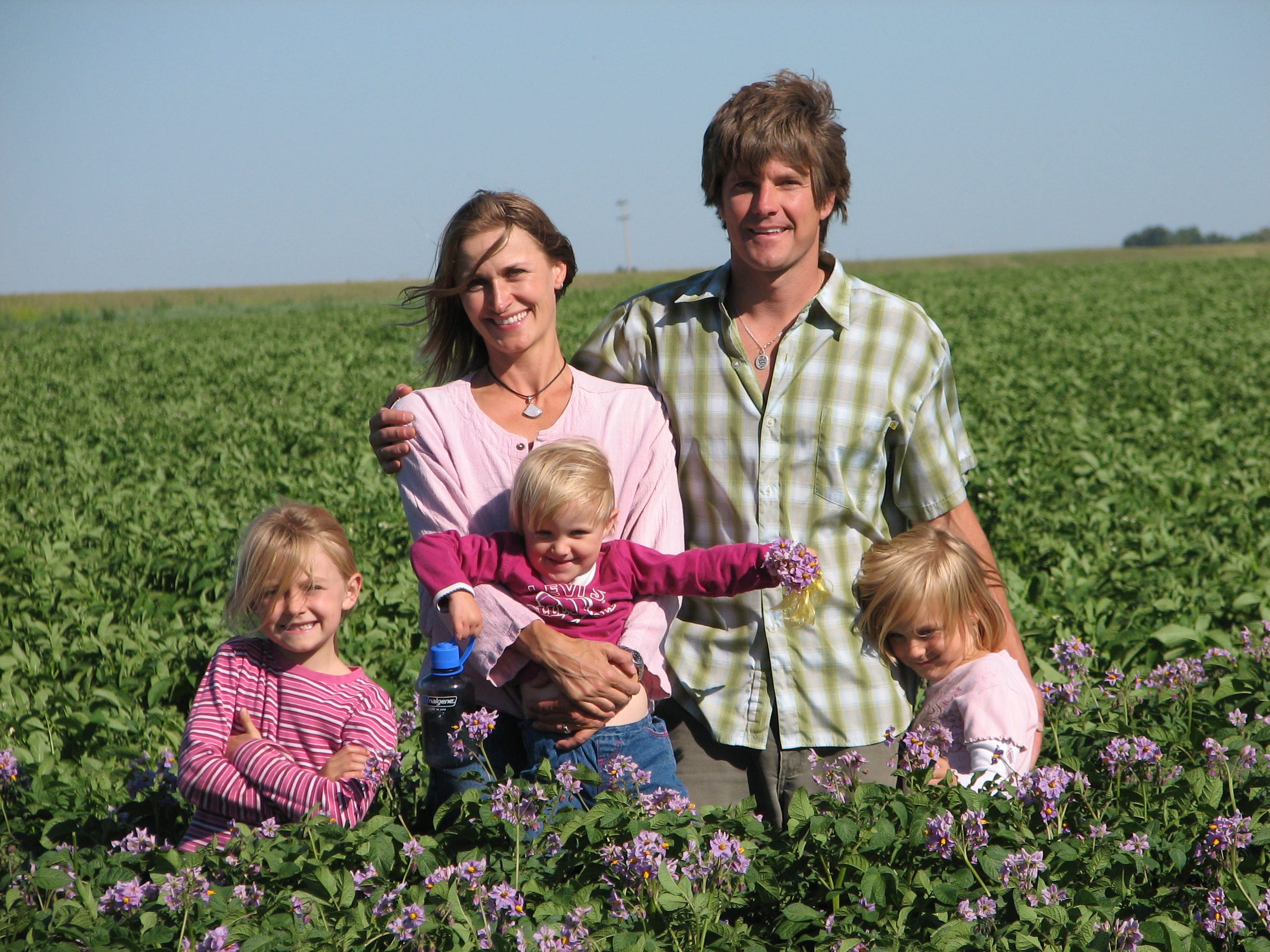
Harold always says: healthy soil, for a healthy plant, for a healthy population. Soil is where resilience begins. Climate. Nutrition. Biodiversity. Yield. Digestate and circular nutrient cycling are not fringe ideas. They are foundational tools.
Theme 2. Aligning risk, reward, and responsibility across the food system.
Farmers carry climate risk, biological risk, yield risk, and increasingly, contractual and liability risk. Downstream margins are typically more stable. If regenerative agriculture is going to scale, it must
become economically investable for the long term. PepsiCo’s emerging GHG-per-pound incentive models are exactly the kind of thinking that can move this forward.
Theme 3. Building a trusted, ethical data ecosystem.
Farmers now provide more operational, agronomic, emissions, storage, and logistics data than at any time in history. AI can unlock enormous value from that visibility. But transparency must strengthen farmers, not unintentionally squeeze them. A reciprocal, farmer-first data model matters.
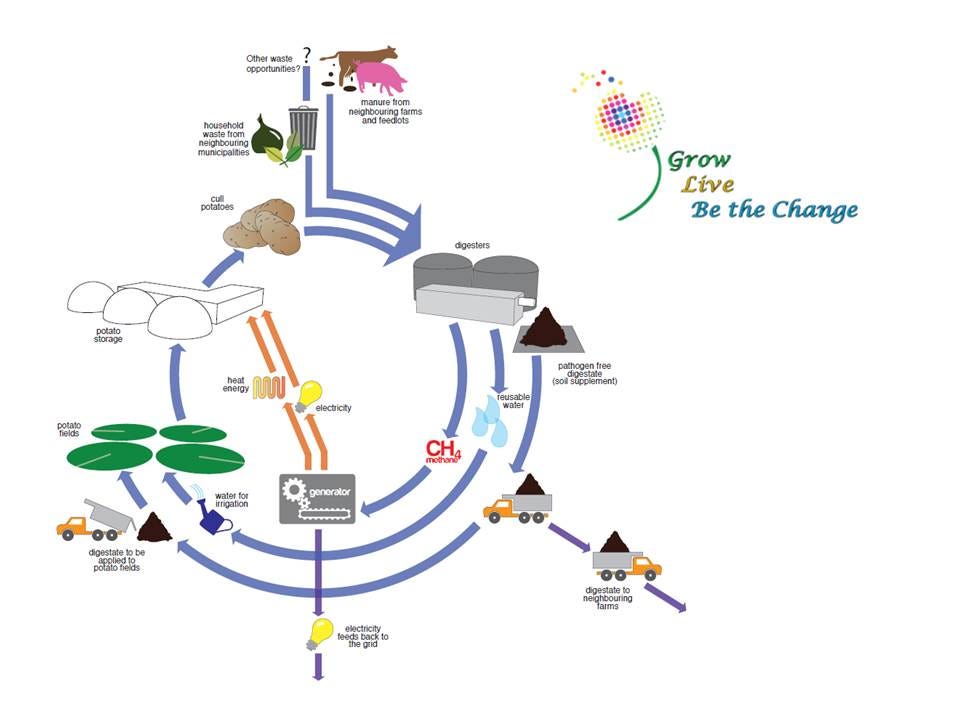
Theme 4. Circular biogas and RNG pathways.
Turning agricultural and food waste to biogas. Biogas to renewable Natural Gas (RNG). RNG to BioLNG. Reduced Scope 3 emissions across trucking and shipping. Digestate back to soil. We live this loop every day at our on-farm biogas Facility GrowTEC. It aligns directly with emerging transport decarbonization pathways and International Marine Organization Net Zero Fuel ambitions. Circular agriculture is not theory. It is operational.
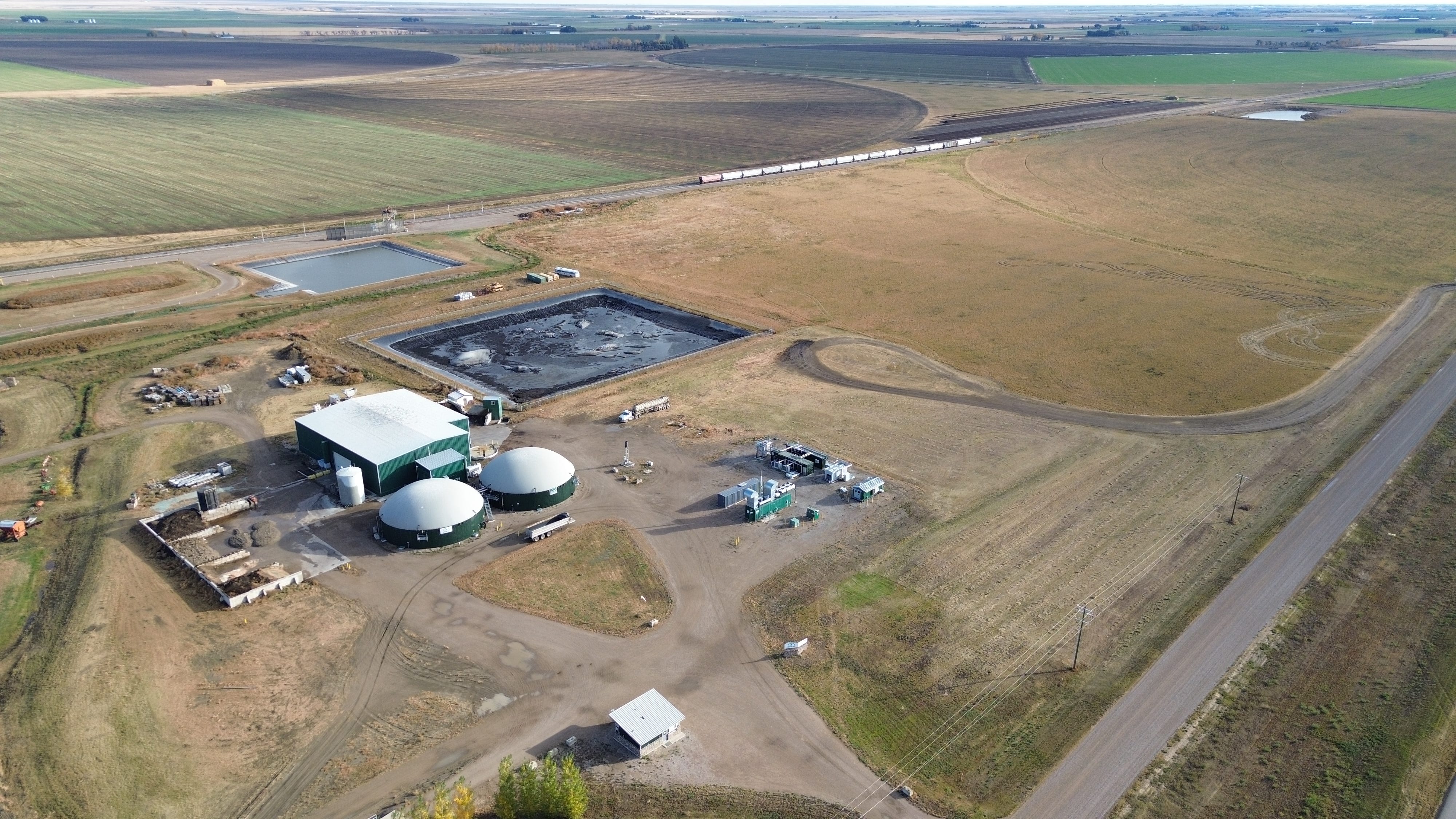
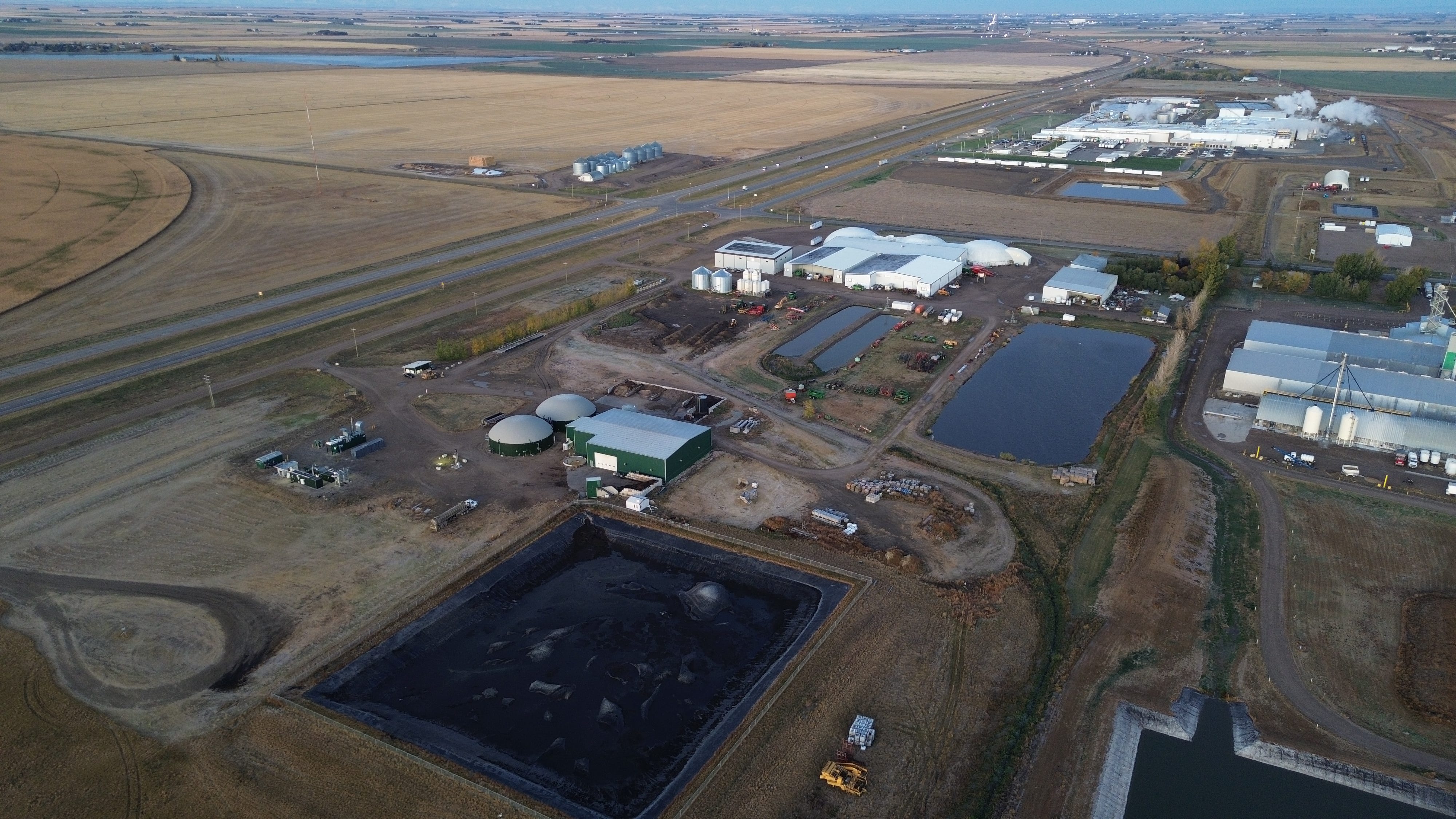
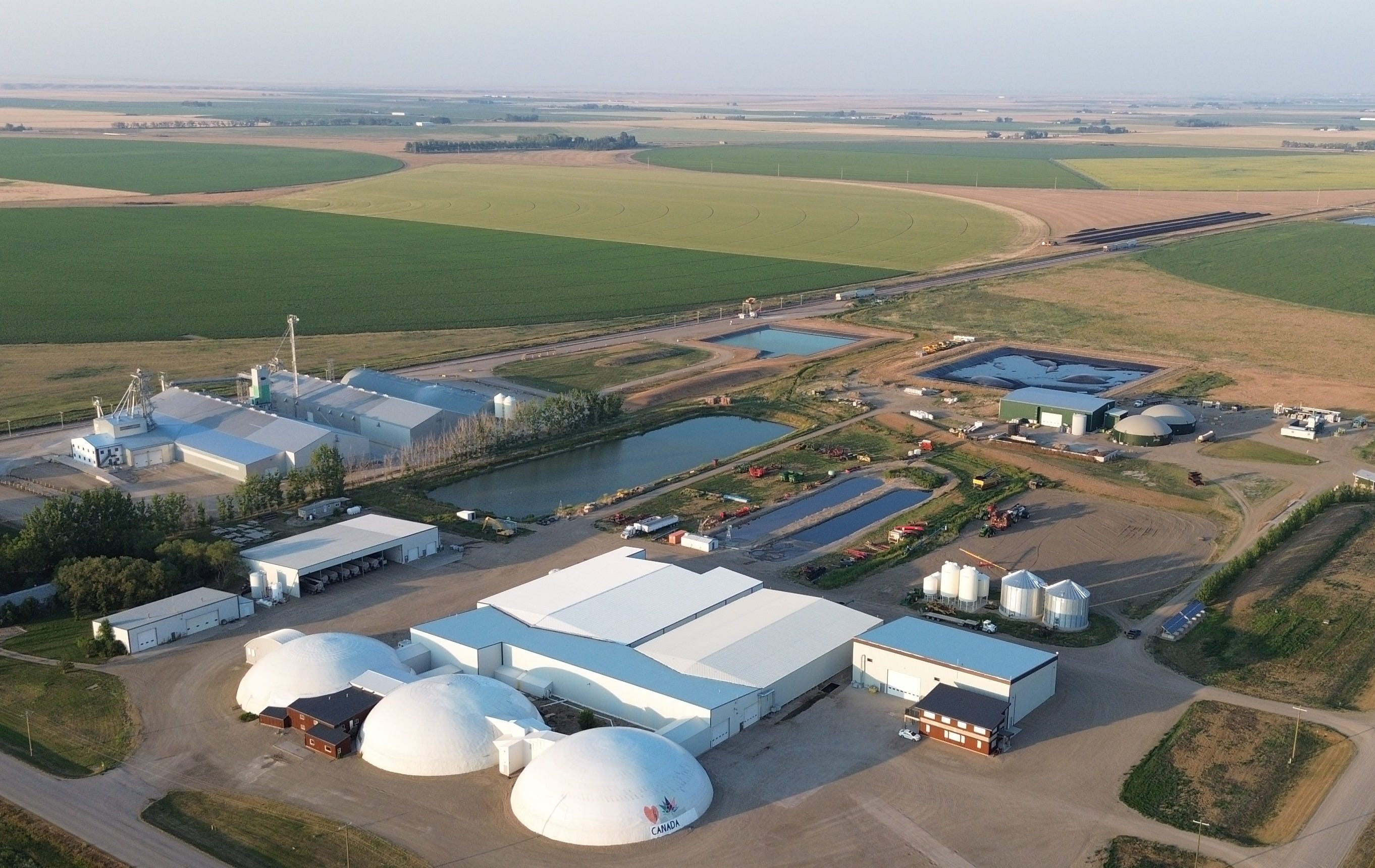
GrowTEC (Our on-farm Biogas Facility in Partnership with EverGen Infrastructure)
and our Domes - … see a circular, dome trend yet?
Theme 5. Tokenized verification of regenerative outcomes.
For those unfamiliar with the language, blockchain is simply a secure digital record system that cannot be altered after the fact. Think of it as a shared ledger where verified actions are permanently recorded and visible to those who have access. It is infrastructure, not ideology.
Tokenization builds on that infrastructure. A token is not a speculative coin. It is more like a digital receipt for a verified outcome. If a farmer improves soil carbon, reduces emissions, or enhances biodiversity, that verified action can be recorded and represented as a unit of value.
Farmers generate immense environmental value: soil carbon gains, nutrient efficiency, avoided emissions, biodiversity. Only a fraction of that value is recognized or rewarded. Tokenization could translate high-quality farm data into verifiable units that support corporate Scope 3 reporting while strengthening farmer economics. PepsiCo is uniquely positioned to help shape that global framework.
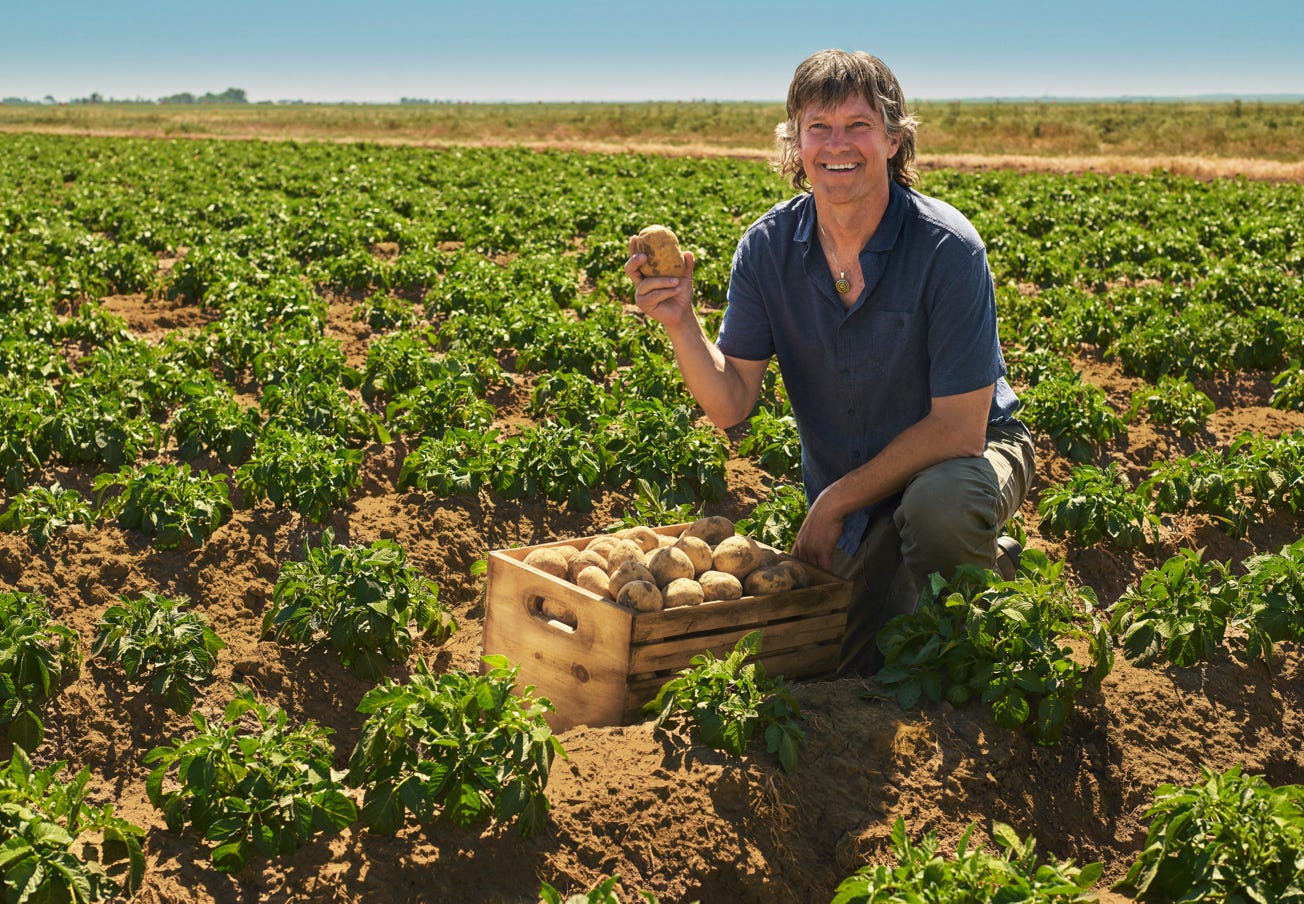
These were the 5 problem sets I shared with Caroline. Topics I thought made sense to dig into at Davos. When I hit send, I was not lobbying for more stage time. I was answering honestly. And the invitation expanded. In addition to the Farmer Breakfast, I was asked to sit alongside Jim Andrew on the “Partners in Possibility” panel. That second panel meant I was lucky enough to represent farmers at a curated breakfast AND I was stepping into a broader systems conversation about finance, partnerships, risk sharing, and the future of food. That was the mindset I carried into Switzerland.
4. Alpine Time and the Quiet Line
Switzerland has a way of slowing you down, even when everything around you feels fast. Before Davos, we spent time in Lucerne. There were watches and clock shops everywhere. Swiss-made. Precision engineered. Some selling for a few hundred francs, others for tens of thousands. Same purpose. Radically different value. It struck me how much of that value is storytelling, trust, and reputation built over time.
Precision matters here. Kyra and I landed in Zurich with wide eyed excitement. Before heading to Davos, we took a day trip to Lucerne. And then I stood in front of a wounded lion carved into stone.
Standing in front of the Lion Monument stopped me in my tracks. It’s not a triumphant sculpture. It’s wounded. Dignified. Quiet. It represents duty and sacrifices more than glory. I didn’t know it at the time, but that lion helped frame my week ahead.
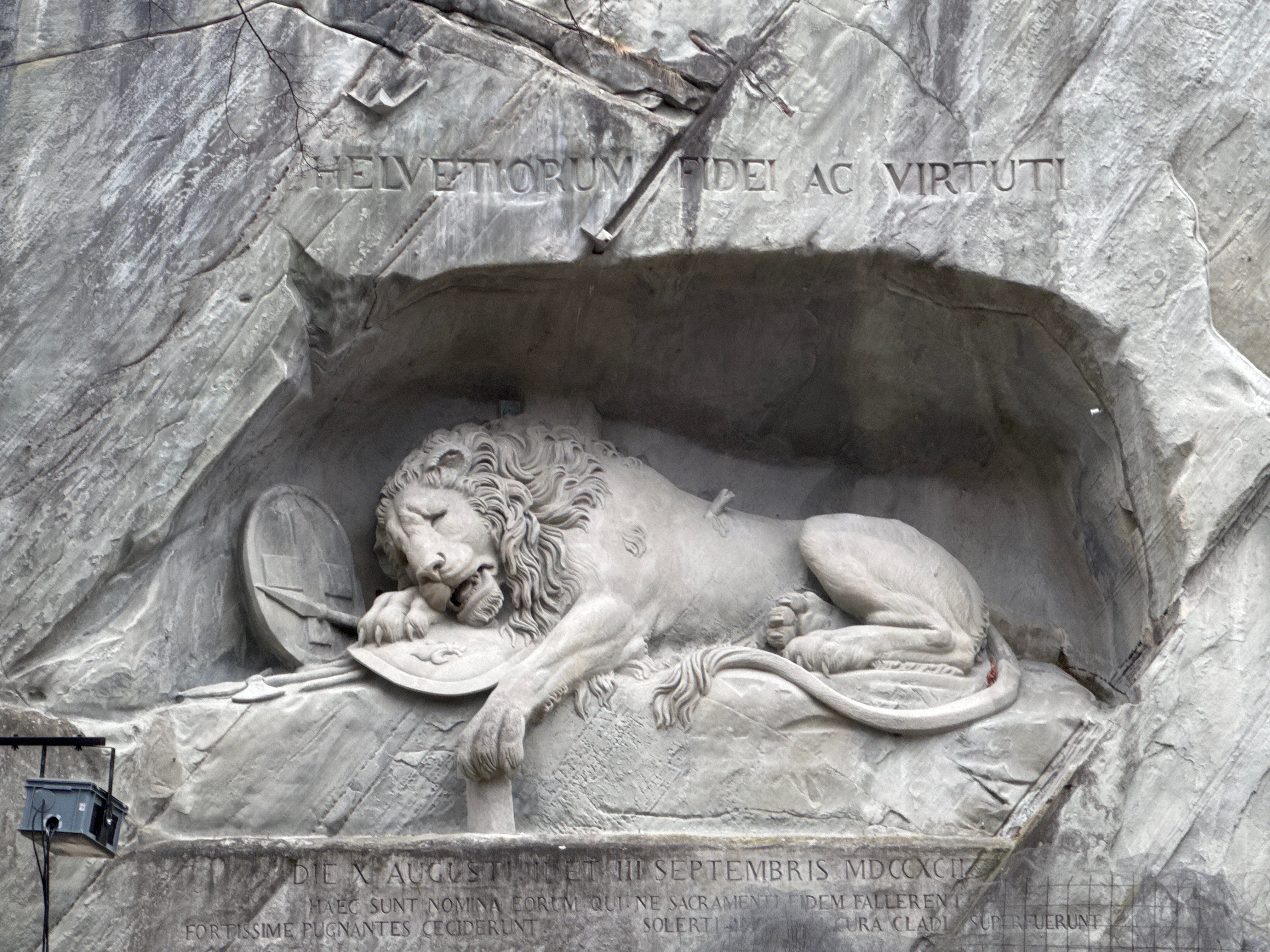
Because climate work can feel like a losing fight some days. Especially when the most influential man in the world, the “king” New Yorkers were protesting, calls climate action a hoax. When regenerative agriculture, renewable energy, and long-term stewardship are dismissed as naïve. And yet, you hold the line anyway. When ROIs across the system are not fair and balanced among risk and dedicated work, you keep going.
Farmers understand this. You don’t farm for applause. You farm because the work matters. Because if you don’t show up, nothing else downstream exists. That quiet resolve felt like a fitting prelude to Davos.
Behind the Lion sits A Glacier Garden.
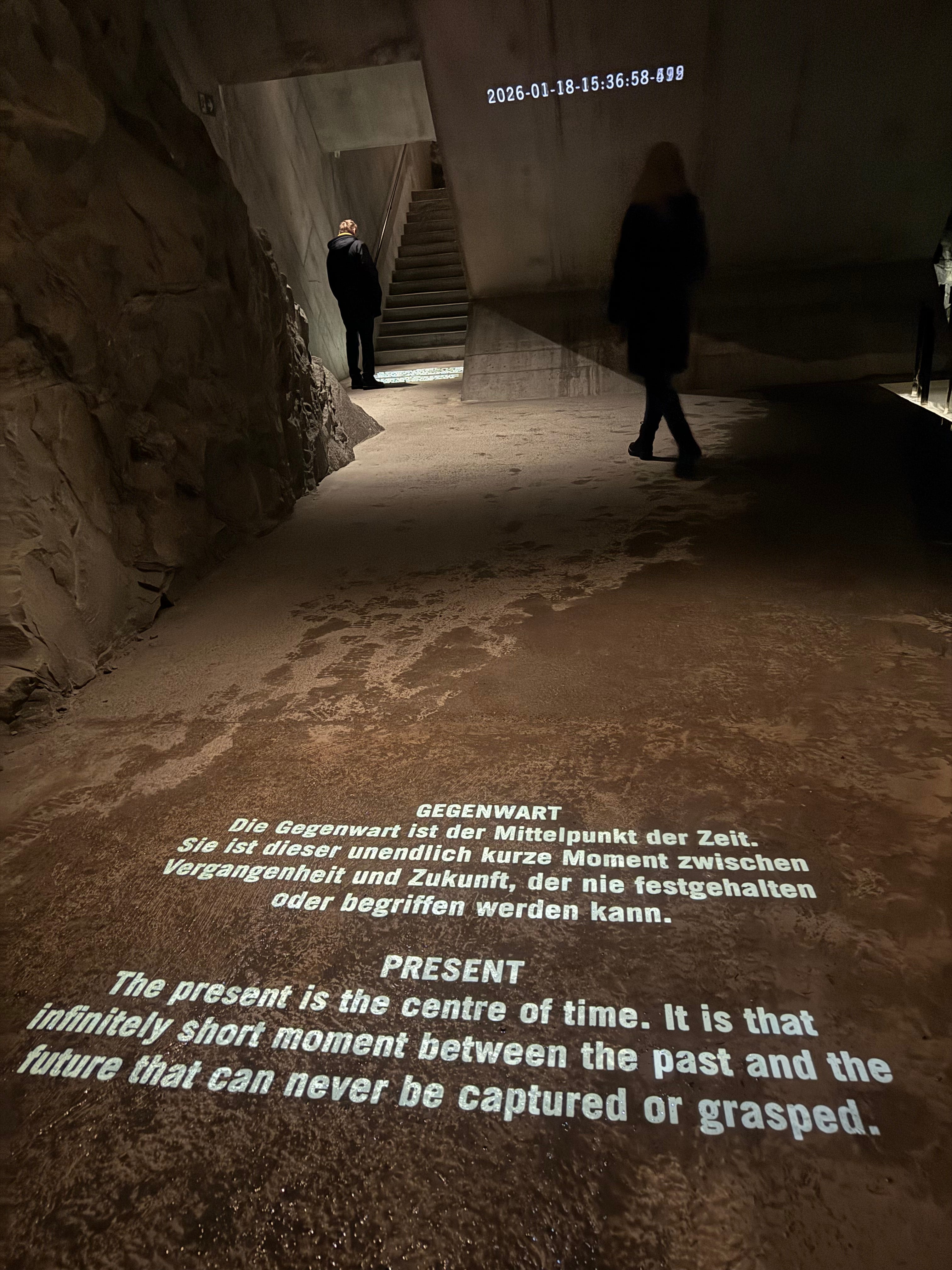
A walk-through time.
Caverns - Geological layers.
A simple display - Exact time
that moment - To be present.
To stand fully where you are
5. The Village Transformed
Then we travelled across the Swiss landscape. Snowy valleys, mountain peaks, wintery trees, postcard chalets. The Alps that define Alpine. The trains were immaculate, and everything ran with calm precision. Cross-country skiers everywhere. Outdoor rinks and trails. Activity in every snow-covered corner. A true winter wonderland.
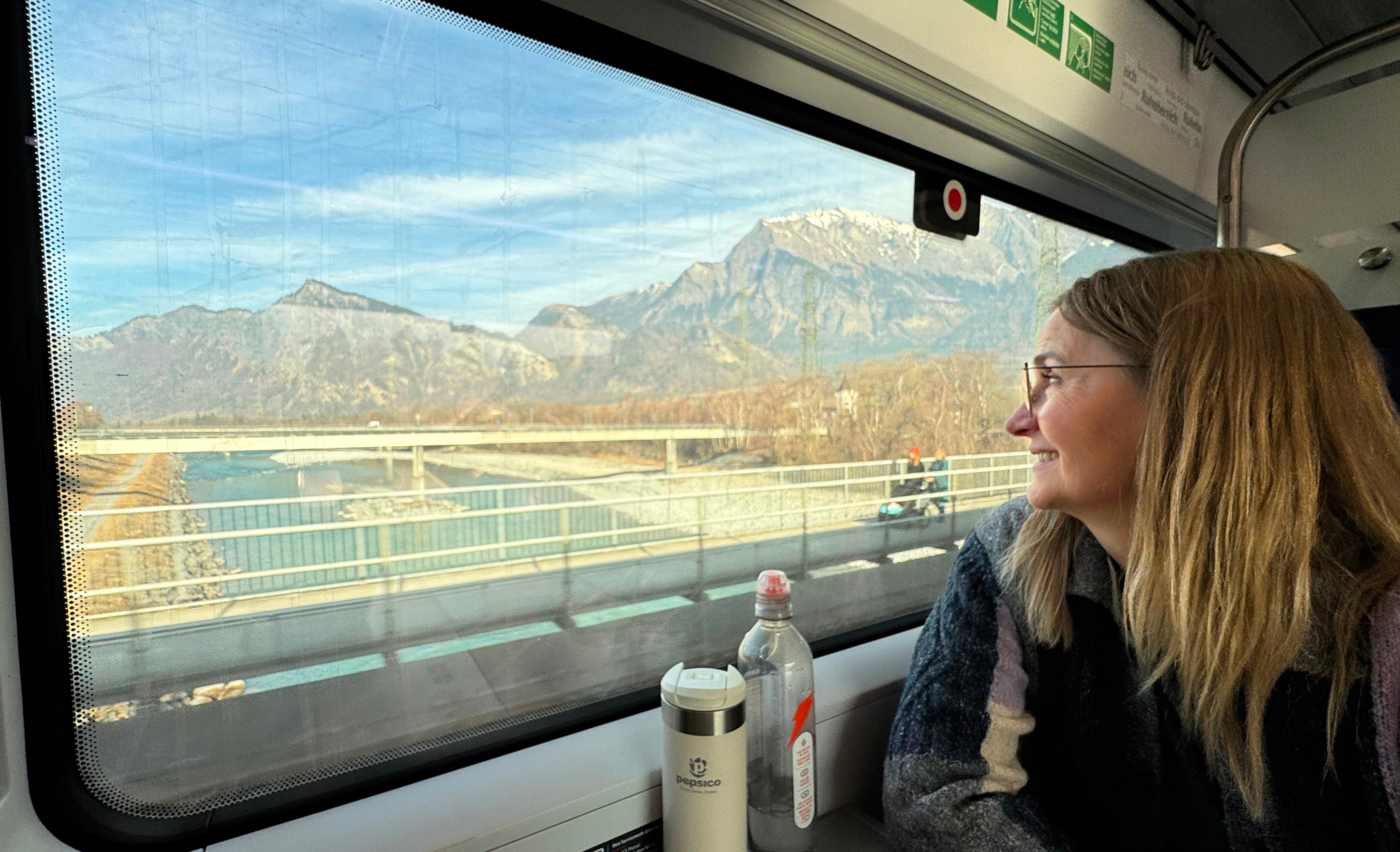
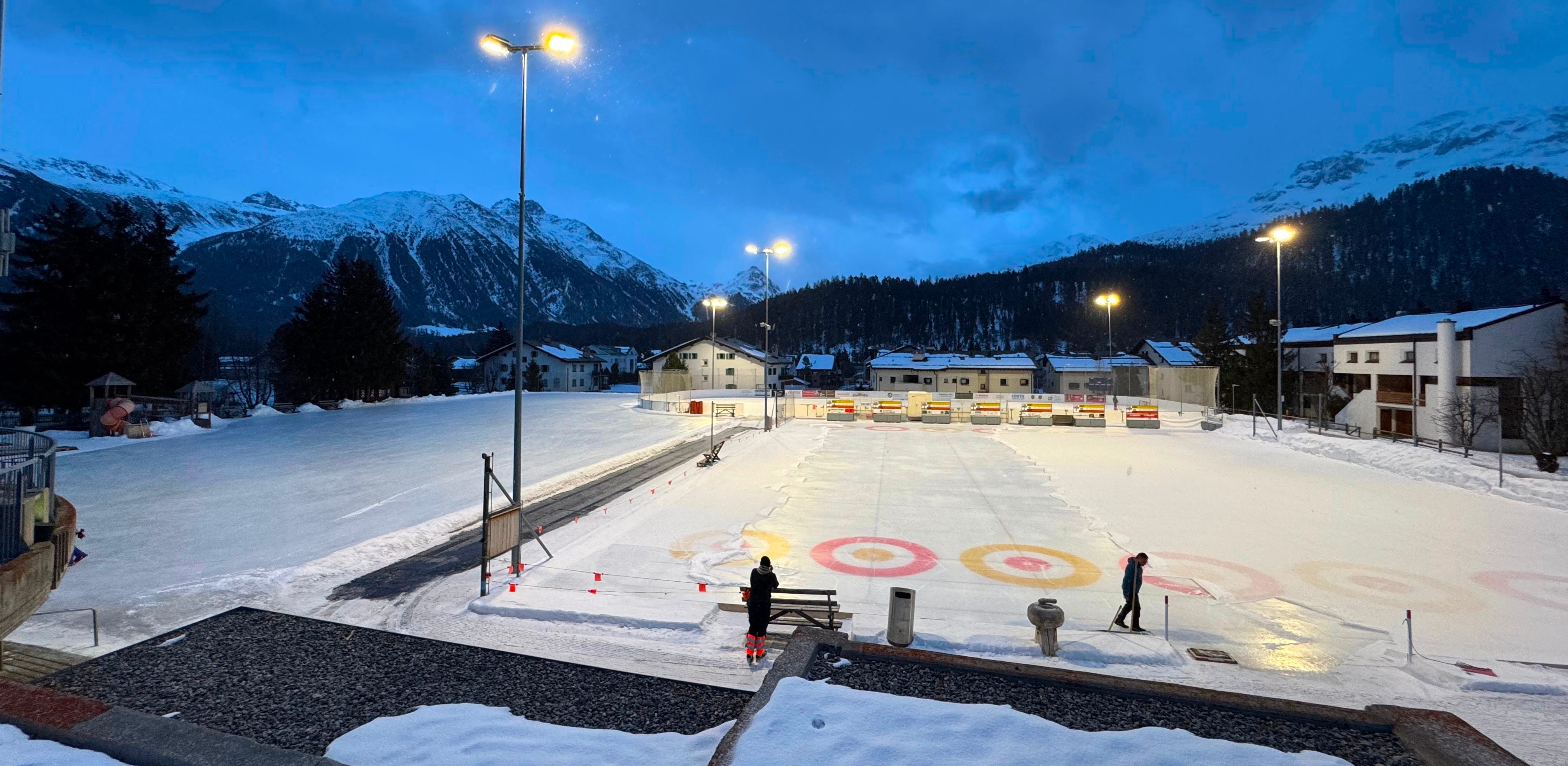
And then the Swiss quiet snapped into something else. Davos. World Economic Forum 2026.
Snow. Black SUVs. Snipers on rooftops. Police with machine guns on the streets. Check points and security everywhere. Perfect coats and fur fashion. Suits and formal wear. World leaders and CEOs walking the street like it’s normal. And there we were. Farmers from Alberta.
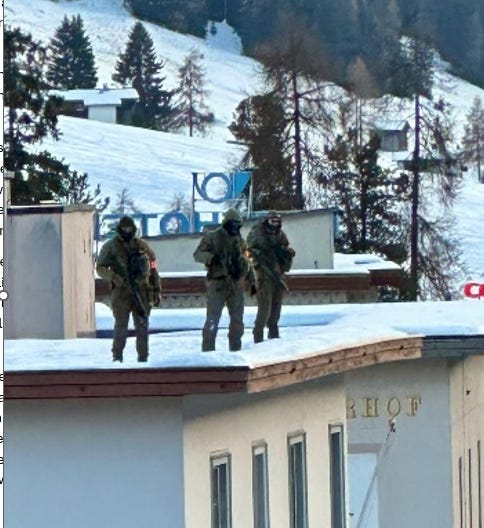
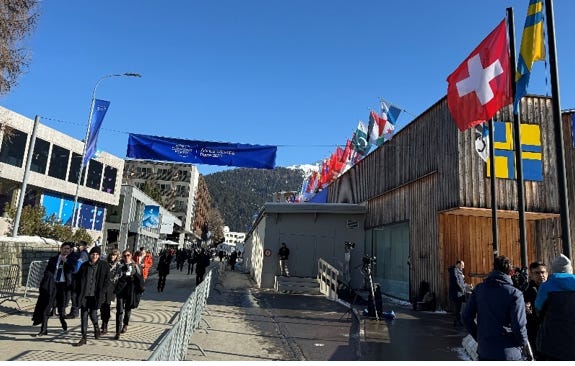
I felt a mix of awe and excitement that honestly didn’t match my age. A bit like showing up to your first day of work after university. You know you bring something, but you also know how much you don’t know.
Davos is a small town in the middle of the Swiss Alps. WEF transforms it. Main Street businesses clear out and global government officials and corporates arrive. The street fills with pop-up “houses” and expo-style invitations to come in, learn, invest, or pitch. Most venues hold 30 – 40 people. PepsiCo’s home base was set up in a beautician shop. We kept wondering where all the equipment went. Davos clears space, and the Forum moves in.
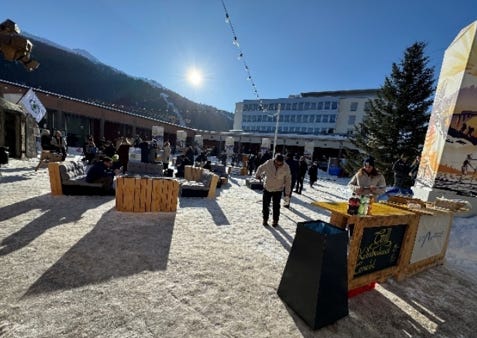
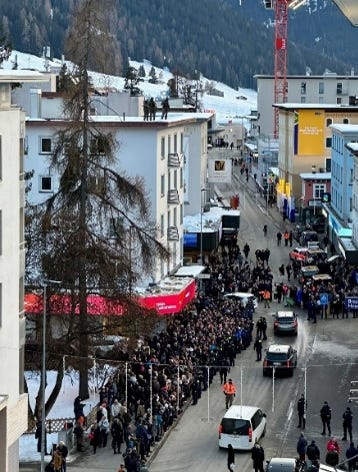
The global elite. The money. Corporate giants and upcoming tech magnates. It’s a transformation you can’t fully capture without being inside it. It felt like being beamed into a world we don’t know, where presence, administration, and spectacle are installed with little regard for cost. I understand the disjoint, the questions about expense, the protests asking what all this disruption is for.
But I’ll vouch for this: I felt good being there. Borrowed access through PepsiCo, yes, but with real intent. To listen, contribute, and act in a globally aware way that does matter. If this space doesn’t exist, then where do the people with the biggest levers actually come together to make things better? I believe WEF does belong on the global calendar.
There is an openness to it all, until you try to go where you may not belong. We were offered WEF badges that gave us access to the accredited program, a curated set of independently organized events that run alongside the official agenda. It’s how Davos makes room for serious, high-quality conversations, without sacrificing credibility, relevance, and signal.
This was a gift. It did not feel off to the side. It felt recognized. A demonstration that the Forum saw value in amplifying voices that bring real world experience, not just institutional power.
The accredited program was hosted in the
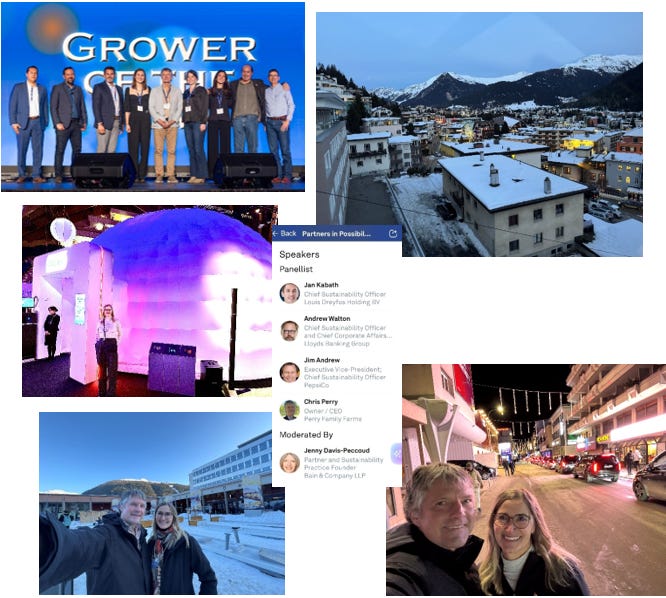
Ice Village, a legacy hockey rink converted into panels and presentations. Blue light. White domes. Events on food systems, tech, and infrastructure. It felt fitting, especially with the Italy Winter Olympics just ahead. The setting had that chilled feel, but properly dressed and prepared, it was a venue with dedicated people doing cool things on a grand scale.
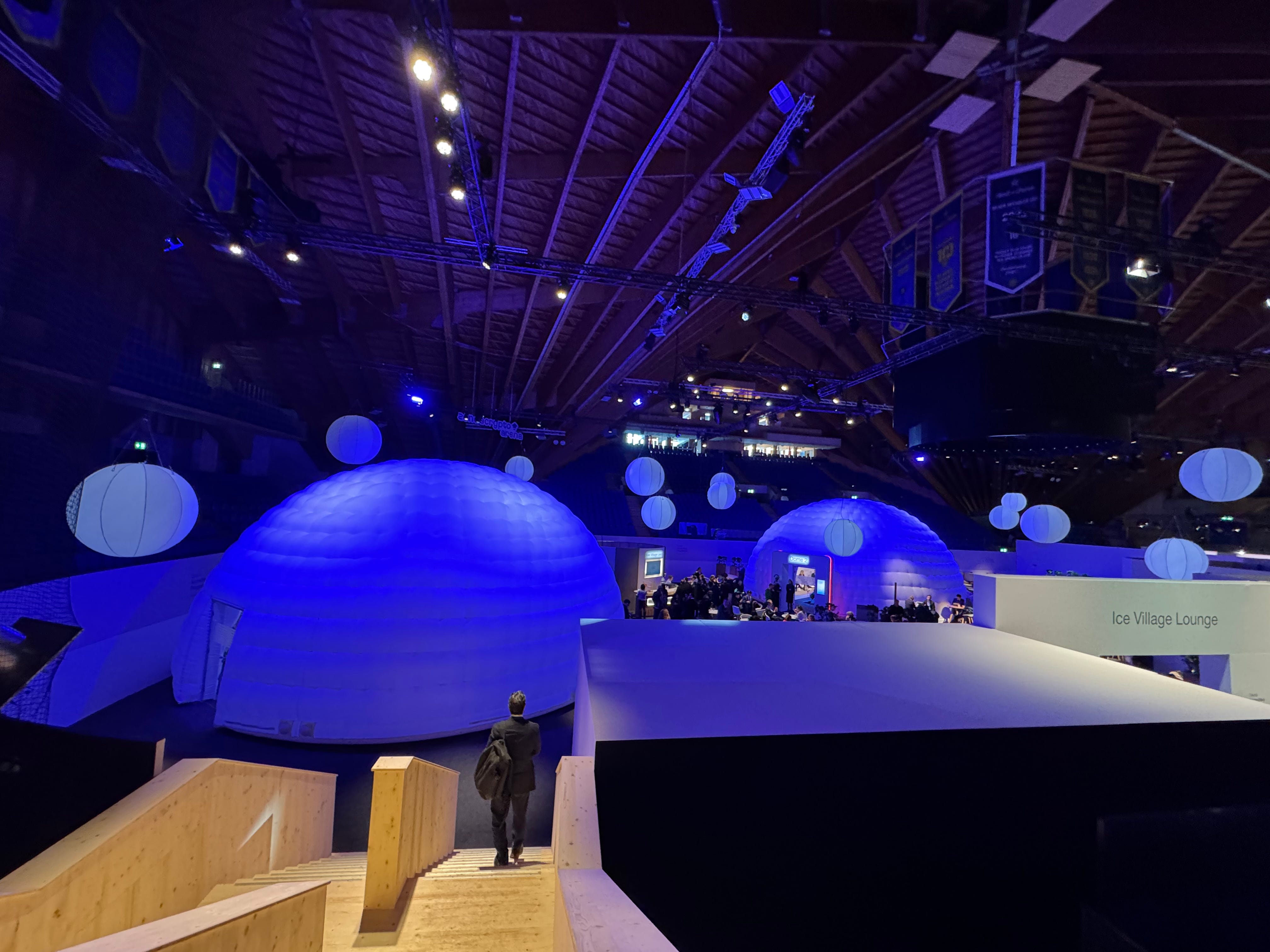
WEF Accredited Program: Ice Village – Dome 1 & 2
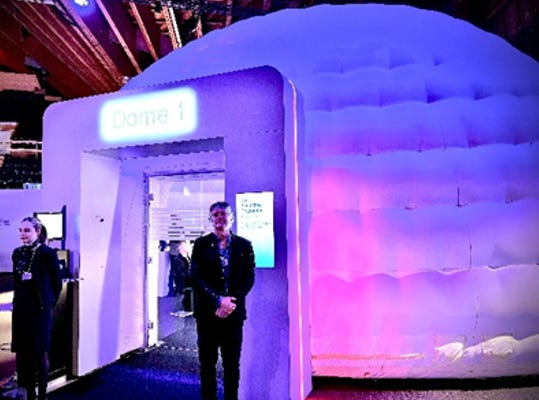
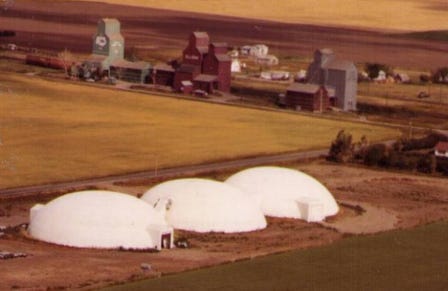
Perry Farm Chin Domes, AB Canada
As Canadians familiar with domes, we were unfazed and took in numerous panels and sessions. We were able to pick and register for events. The WEF runs on a Swiss schedule. Everything in 30-to-45-minute blocks that start on time and end on time. It does not matter who you are. Unless of course you are Mr. Trump. Interestingly, Davos Congress was the venue in which he said that he wouldn’t use force re: Greenland, shortly after Prime Minister Mark Carney’s speech earned a rare WEF standing ovation, and amid much international networking that did not include the U.S. Davos has a history of geopolitical discussion and conflict mediation. But outside of that, all was punctual to a T.
The scale forces discipline. If you ever go to events of this size and fashion, be organized. Know what you want to see, who you want to meet, and carry focus with intent to learn and get to the point. I wanted to take it all in like a kid in a candy shop. In reflection you cannot do this. Not even close. And then you miss opportunities for better learning, listening, and networking.
I learned this better by the third day, a bit late. With the help of Audrey, a fellow attendee Kyra and I had a random conversation with at the Human Change House.
Tuesday, January 20, 2026, we registered, got our feet on the ground, and got a feel for the place. We registered for a heap of sessions from “Shaping the Future of AI” to “Food for All: Transforming Ag for Inclusive and Resilient Food Systems” to “AI and Carbon Accounting.”
The day was absolutely topped off by our Prime Minister Mark Carney’s speech. WOW. A proud Canadian moment. There was real buzz about his talk in conversation after conversation, not just among Canadians.
A moment that will go down in WEF history.
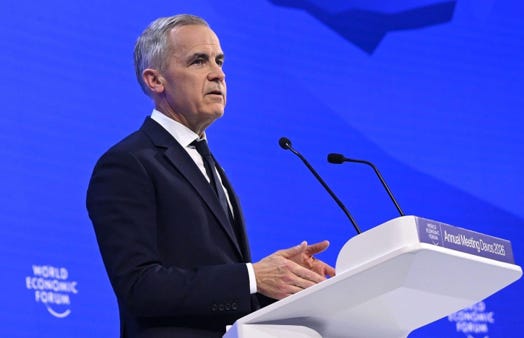
Prime Minister Mark Carney
3rd ever Standing Ovation at the World Economic Forum
From the Forum’s follow up newsletter:
“North America was a focal point of the World Economic Forum’s 56th Annual Meeting in Davos, Switzerland, with US President Donald Trump and Canadian Prime Minister Mark Carney among the most prominent leaders in attendance.”
Other notable people in attendance were executives from across industries including Jamie Dimon, Chairman and CEO of JPMorgan Chase; Alex Karp, CEO and Co-Founder of Palantir; Larry Fink, Chair and CEO of BlackRock and Interim Co-Chair of the World Economic Forum; Marc Benioff, CEO and Co-Founder of Salesforce, and Bill Gates, Chair of the Gates Foundation, to name a few. They joined conversations on growth, resilience, and technological transformation. Meanwhile, well-known academics and cultural figures contributed to broader debates on issues ranging from sustainability to social cohesion.
Somewhere between registering for AI panels and listening to Carney, I realized something.
We weren’t just observing Davos.
We were going to be part of it.
That part came next.
6. Farmers in the Room
One cannot find The Farmer Breakfast in any public program. It wasn’t listed. Invitation only. Early morning. One hour built around something deceptively simple: farmers speaking in their own voice.
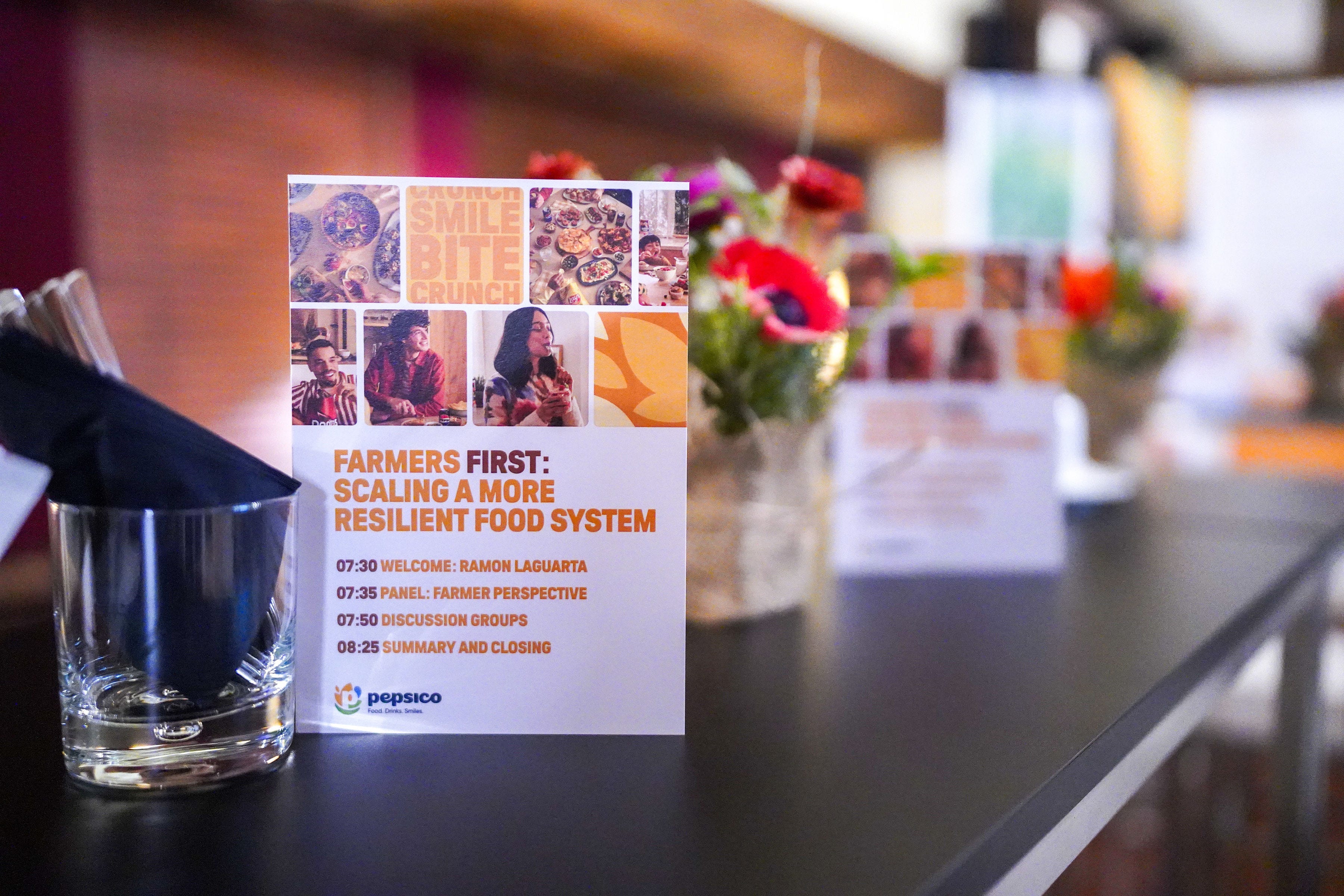
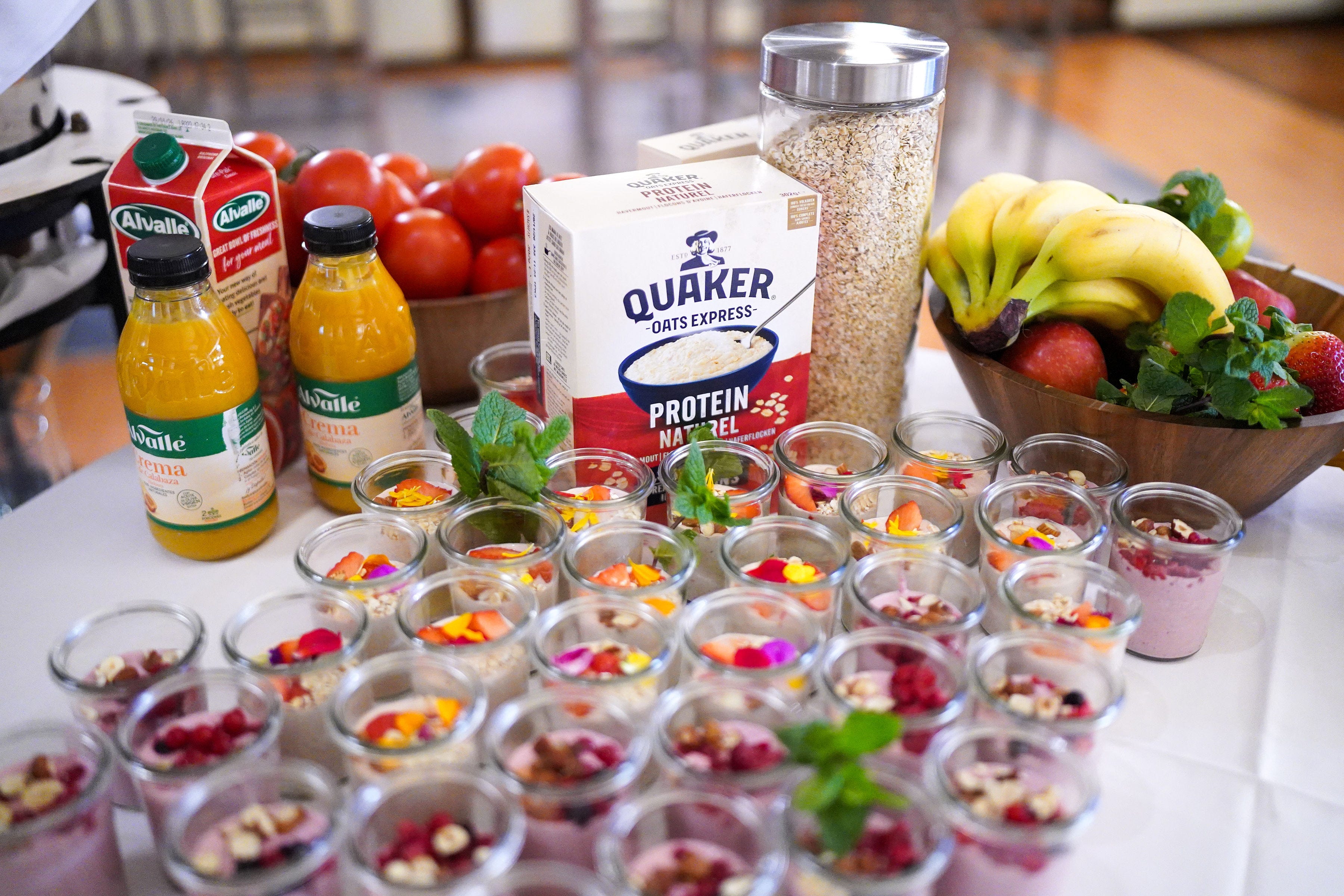
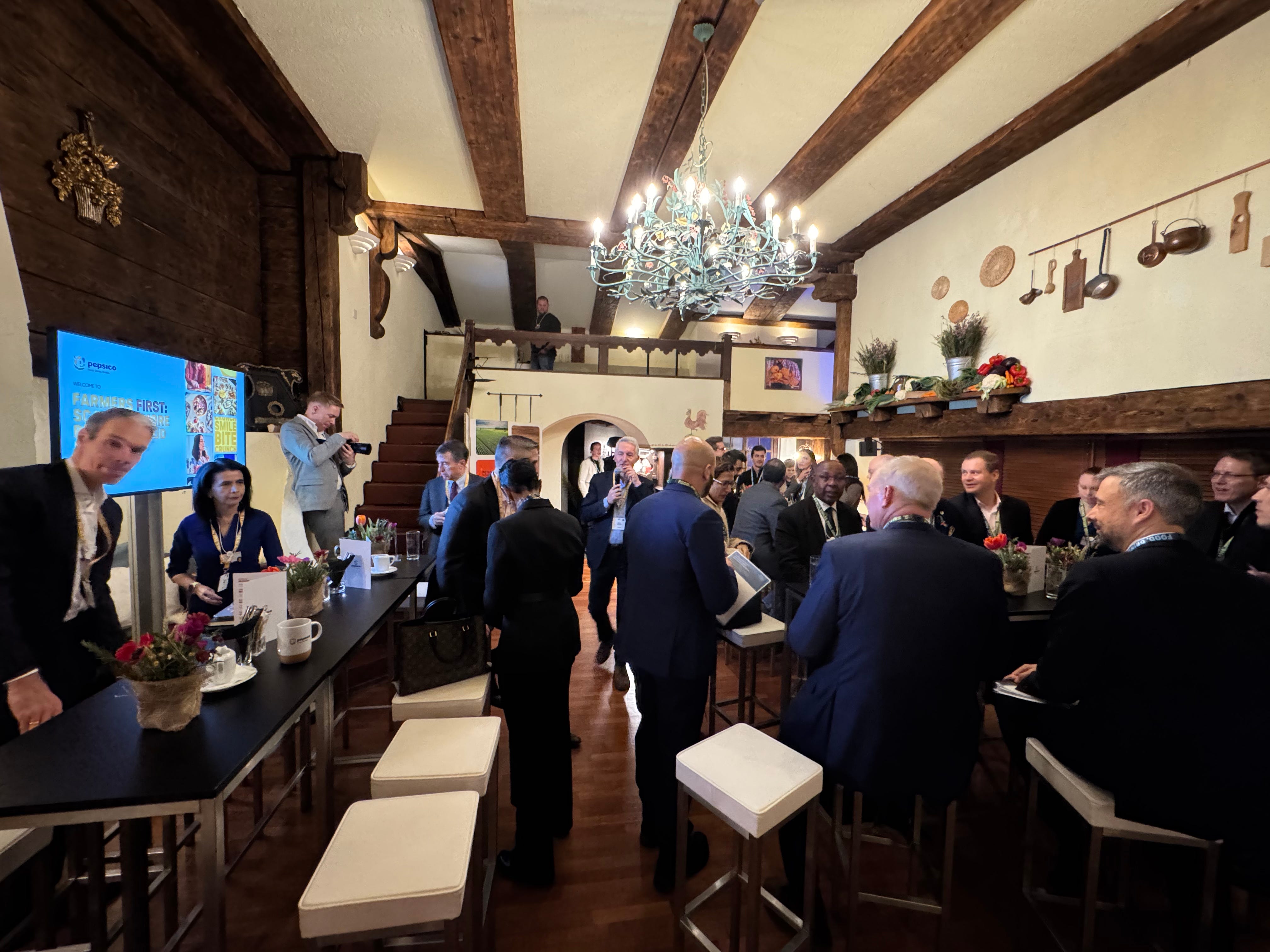
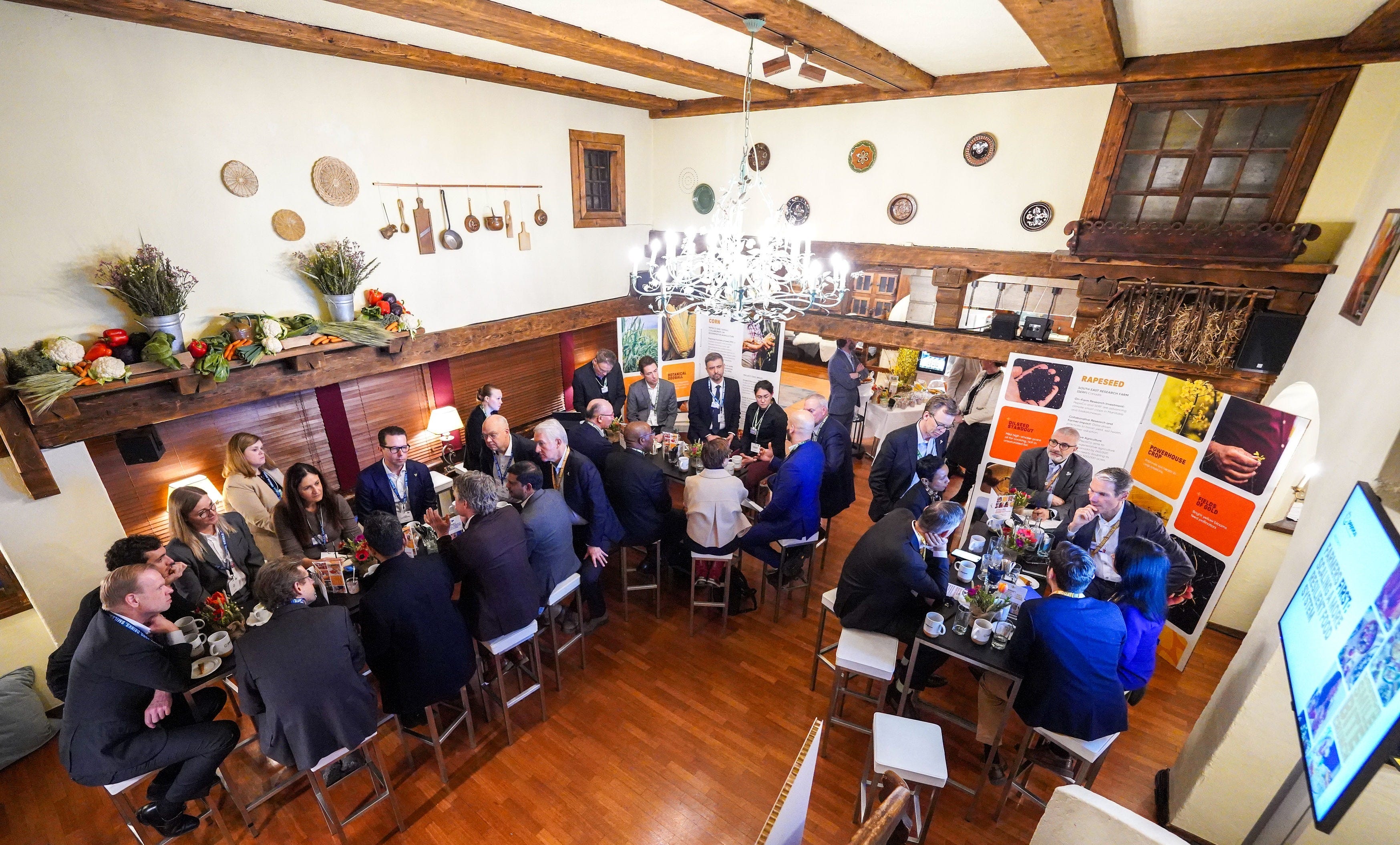
The room was warm. Dark wood. Cozy. A literal kitchen at the back where PepsiCo had brought in their own chef and curated the menu, from Quaker Oats and smoothies to Doritos breakfast wraps and quiche made with Lays potato chips. Ingredients front and center. PepsiCo leaning into its identity as a food company, not just a beverage brand. Many later said it was their favorite event of the week.
Thirty to forty people filled the room, but it wasn’t the quantity that mattered. It was the type, and the fact that they had chosen to be there. C-suite leaders and global executives showing up with sincere interest.
Ramon Laguarta, Chairman and CEO of PepsiCo, personally opened the breakfast and introduced the panel with a warm, authentic message of bringing farmers to Davos and having us a part of the conversation. Jim Andrew, Chief Sustainability Officer, moderated. Jim is a fantastic moderator that draws in and engages the audience with ease, humour, and genuine passion.
I was joined by rock stars Maria Vitoria Vasconcelos, who works with agroforestry growing coffee and corn in Brazil, and Thibaud Deschamps from France, a rapeseed grower and chairman of the La Tricherie cooperative, known for its sustainability leadership.
Maria spoke with clarity and restraint, grounding the conversation in the long run’s arc rather than the news cycle. She reminded the room that sustainability only works when it works for the people closest to the land, and that farmers are not a stakeholder group to be consulted at the end, but the starting point. “If solutions do not make sense on a farm,” she said plainly, “they will not scale anywhere else.”
Thibaud followed with complementary urgency, emphasizing that ambition without practicality erodes trust. He spoke about the need to meet farmers where they are, not where frameworks wish them to be, and about aligning incentives with lived reality rather than ideology.
Together, their words shifted the tone of the breakfast. It moved from a conversation about targets and strategies to something steadier: listening first, building with those who carry the risk, and recognizing that durable change moves at the speed of trust.
When it was my turn, I spoke from home turf. Grounding the conversation in time and trust, I introduced myself as a fourth-generation potato farmer from Alberta, Canada, with a 45-year direct contract growing potatoes for PepsiCo Frito-Lay. I spoke deliberately about generations, not fiscal quarters, about hoping for another 45 or even 90 years together. It was refreshing to hear Ramon introduce the panel with a message that we all need to start thinking longer term and in generations.
That framing mattered. It set the tone for everything that followed.
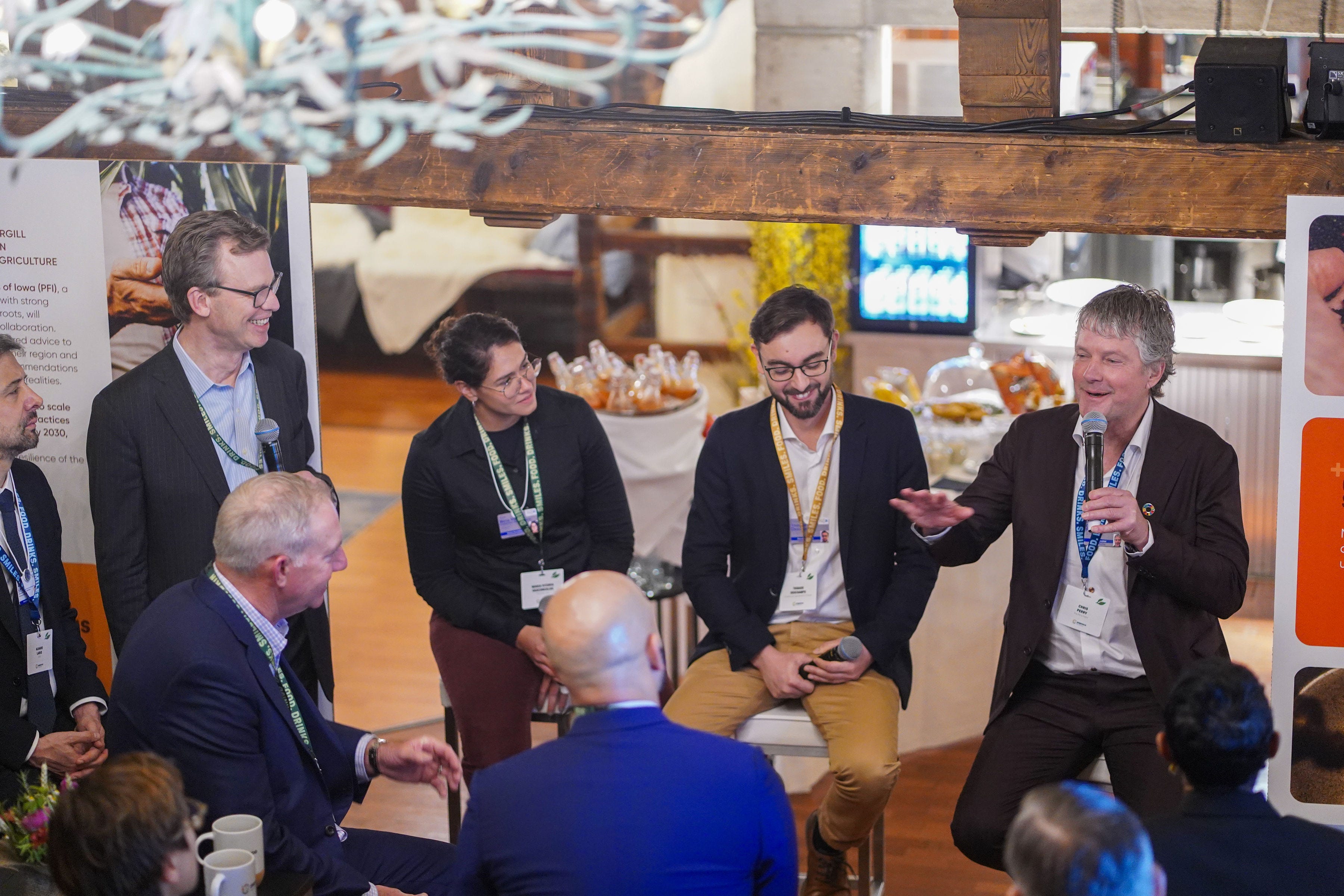
PepsiCo WEF Farmers First Breakfast Panel
I shared how agriculture right now is at a critical moment, where chaos and climate volatility are finally forcing the system to look upstream to the primary producer, not as a risk to be managed but as a partner with data, insight, and agency. I emphasized that soil health is foundational to everything: resilience, yield, nutrition, biodiversity, and long-term viability. As Harold always says, healthy soil, for a healthy plant, for healthy populations.
Farmers already hold immense operational, agronomic, and environmental data. With the right tools and trust, that data can drive real outcomes rather than just compliance. I spoke about building a trusted data ecosystem that includes AI, blockchain, and tokenization not as abstract technology plays, but as practical tools to align incentives and move value closer to the farm.
The core idea was simple. Farmers are creating real environmental value through regenerative practices, but that value is captured too late, if at all. If we can verify outcomes with high-quality data and translate them into trusted units of value, capital can flow earlier, reducing risk and enabling farmers to invest faster in resilience.
When Ramon asked the final question about data and AI before moving to breakouts, I leaned into this point. AI can run through agronomic and operational datasets to improve decisions across water, nutrients, timing, and inputs. Transparent systems can help ensure trust and fair distribution of value. As I finished, I caught Ramon’s eye and saw a nod and a quick wink. Subtle, but unmistakable. The message had landed.
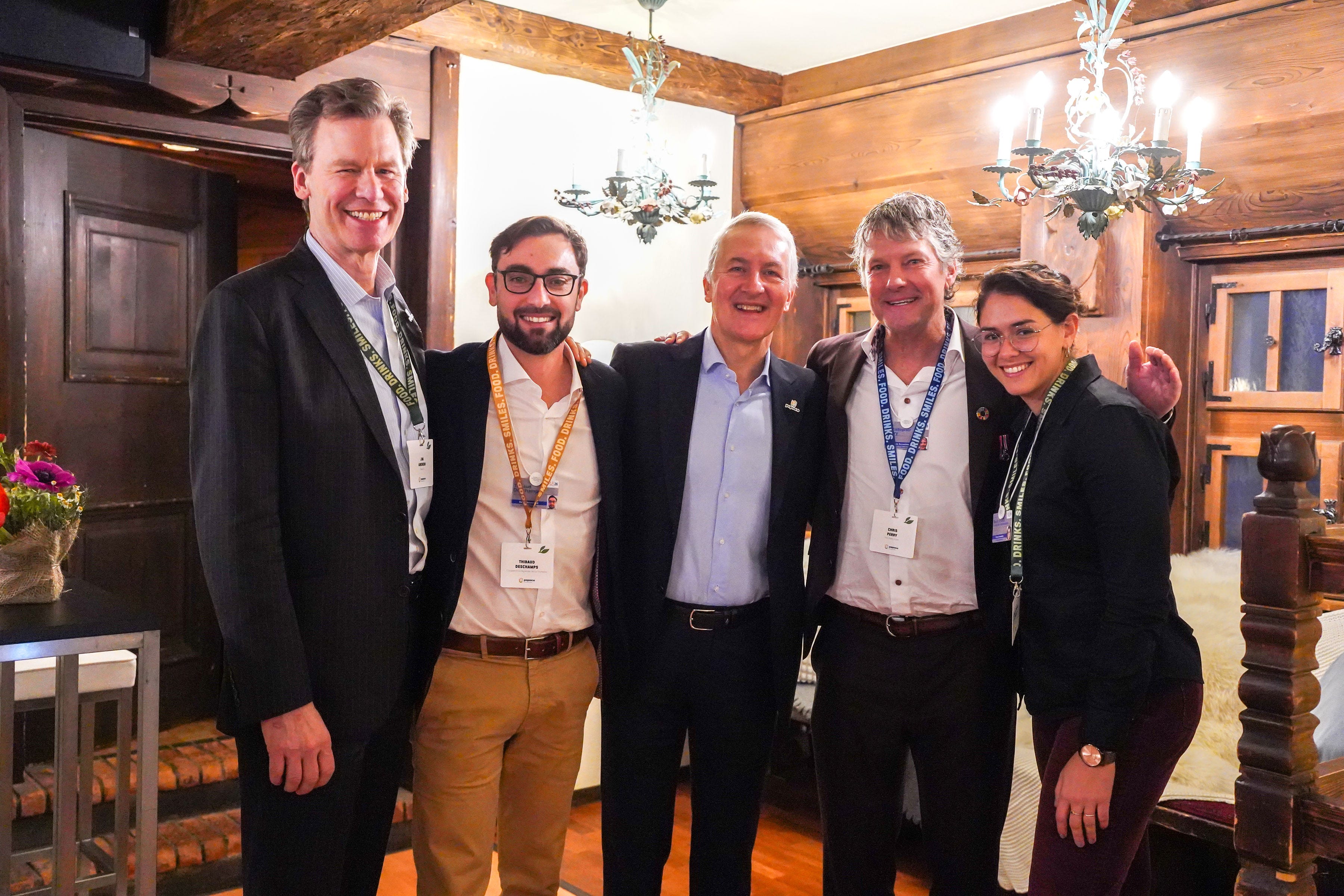
Jim, Thibaud, Ramon, Chris & Maria
The engagement of the crowd surprised me. Executives stayed engaged, and the breakout sessions were not casual table chats. There were pointed questions. Deep curiosity. Leaders wanting to understand how this actually works on the ground and how this model could scale.
Afterward, a man tracked me down to talk more about data ecosystems and value alignment. I asked his name, “Greg Heckman.” and who are you with? “Bunge.” And what is your role there? “CEO” … Can I get a picture?

PepsiCo followed up later with glowing feedback. Ideas. Action items. A desire to replicate this model. That meant something. It felt authentic.
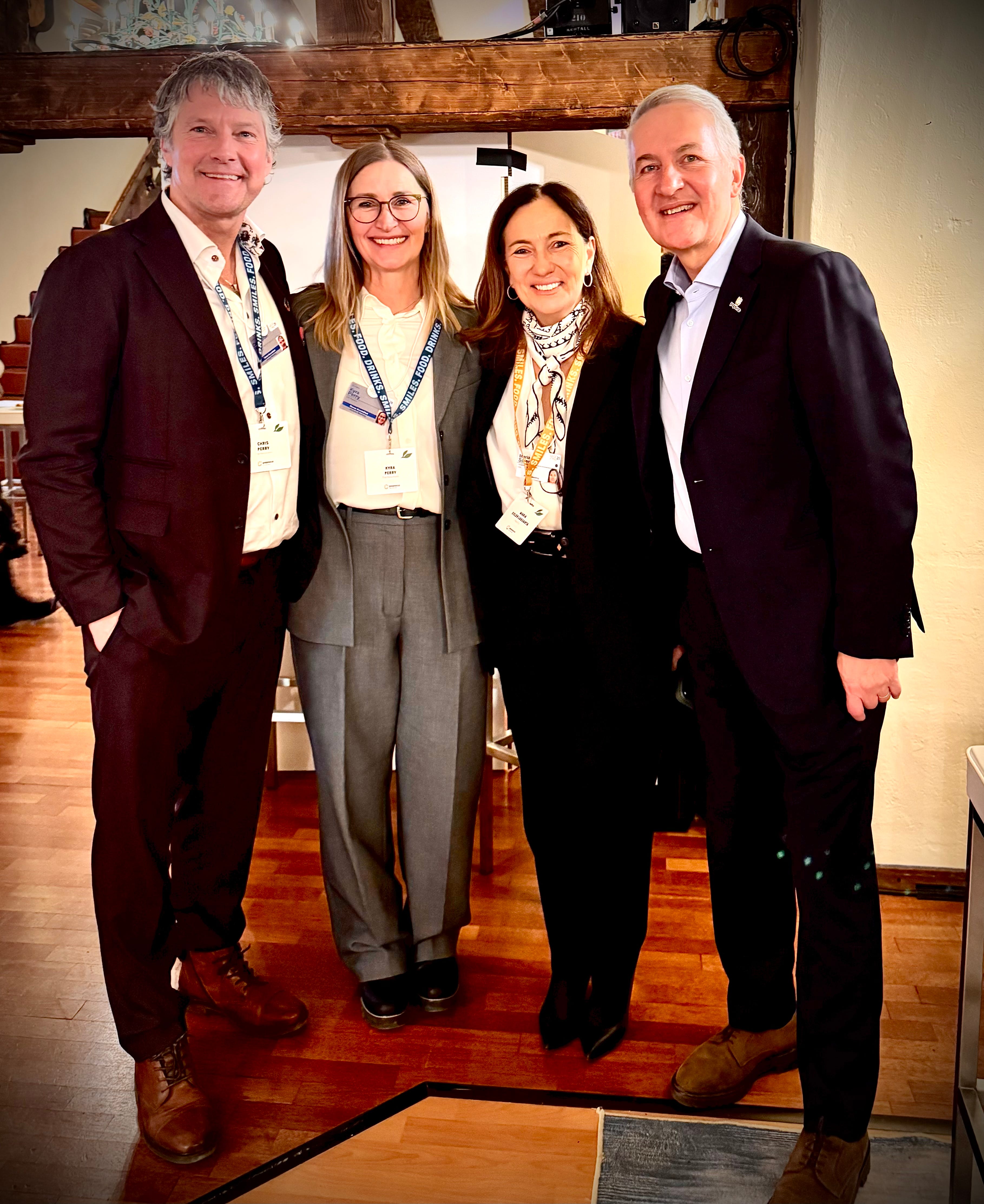
7. From Soil to Systems
The Partners in Possibility panel shifted the conversation from aspiration to execution.
While the Farmer Breakfast had been intimate and grounded, this session widened the lens to the full food system: farming, global brands, finance, commodities. The focus moved from what should be done to how partnerships actually work when the stakes are high and the risks are real.
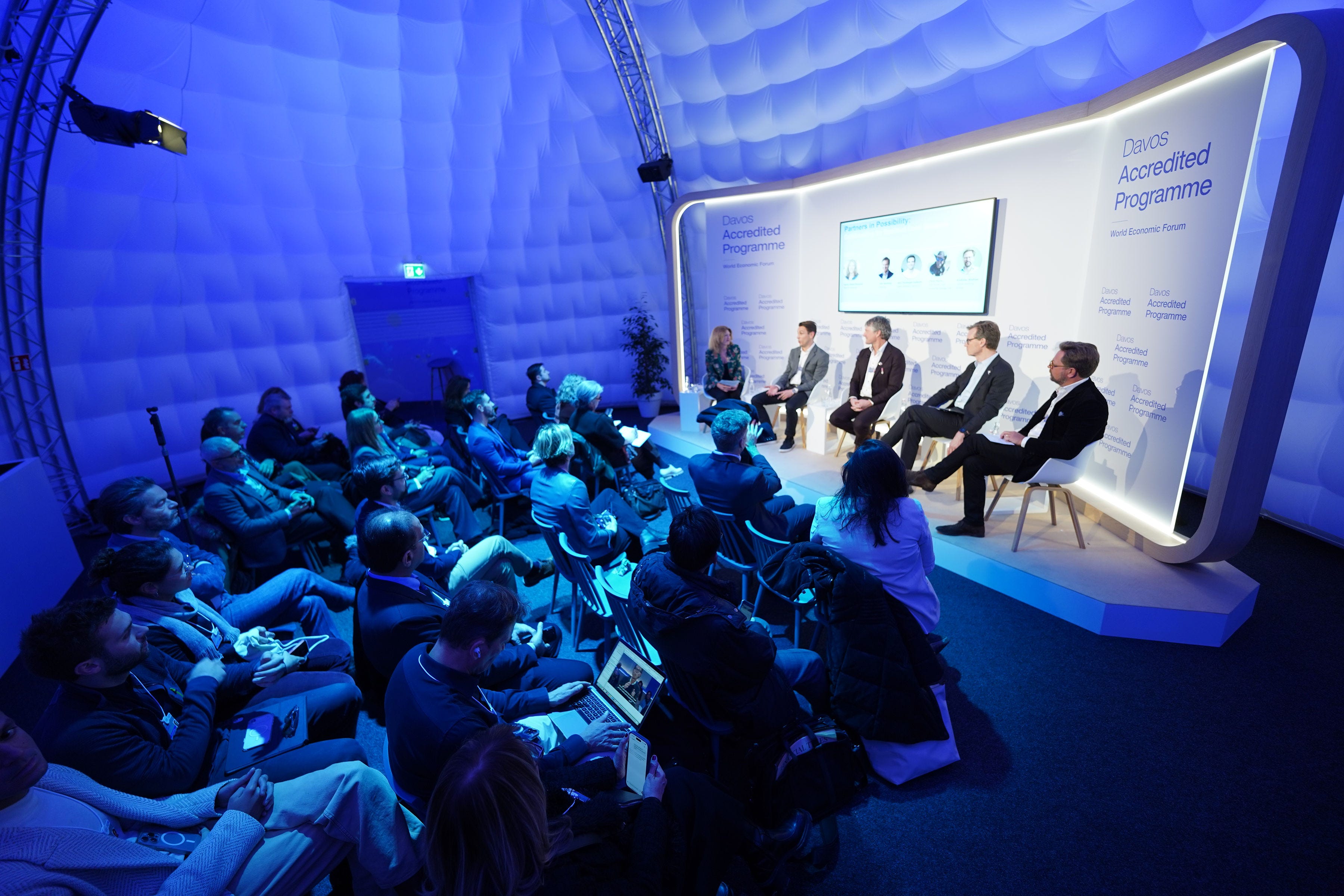
WEF Accredited Program – Ice Village, Dome 1
Panelists included Jim Andrew, Chief Sustainability Officer, PepsiCo, Andrew Walton, Chief Sustainability Officer, Lloyds Banking Group. Jan Christoph Kalbath, Global Head of Sustainability and Energy Transition, Louis Dreyfus Company and Moderator Jenny Davis-Peccoud, Partner and Founder Global Sustainability Practice, Bain & Company.
Jenny brought energy, clarity, and passion as moderator. The discussion included ideas around how sustainability-linked financing is never easy, the importance of creating value before we try to capture it, de-risking transition early so harder challenges can actually be solved, the recognition that sustainability is deeply complex, but complexity doesn’t mean paralysis, and the need for coalitions of winners, not isolated efforts.
From a farmer and operator lens, I shared optimism around credible conversations on blockchain and tokenization as tools, not buzzwords. When designed well, they can help people and planet invest in resilient regenerative practices by connecting real outcomes on farms to capital, policy, and markets. Sustainability is complex. Food systems are complex. But there are good examples out there, and when we’re willing to engage in the complexity together, progress is possible.
When asked about what makes partnerships effective in practice, I spoke from lived experience. Our generational relationship with PepsiCo. Built not on perfection, but on trust, shared investment, and alignment. That alignment has allowed both sides to invest together, particularly in sustainability measures that start with soil as the foundation.
Building soil health and resilience is not theoretical for farmers. It is where climate resilience begins. If we are serious about facing climate challenges, investment must reach the primary producer level in a way that recognizes risk, timing, and economics. Mechanisms that shift value closer to the point of production are what enable real change on farms.
Jim Andrew built on this by reframing partnership as listening. He underscored that PepsiCo does not grow anything. The success of the business depends entirely on farmers being successful. Farmers get one chance a year to make a living. Any partnership that ignores that reality will fail.
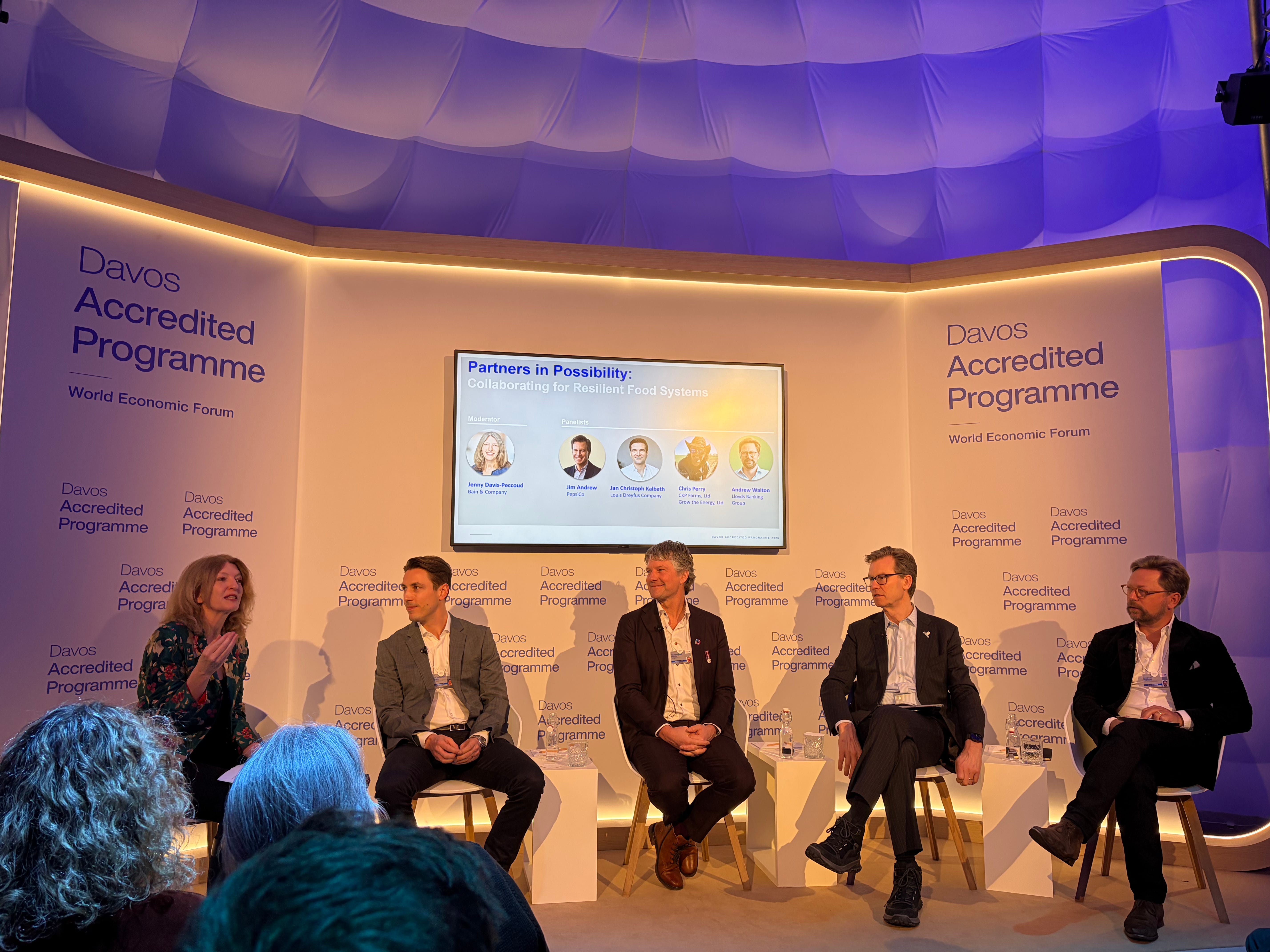
Partners in Possibility: Collaborating for Resilient Food Systems
Jim stressed that listening must be grounded in economics. Farmers are businesspeople. Risk has to be shared, not downloaded. That includes a mix of payments for practices and payments for outcomes, with a clear understanding that if a farmer is asked to change, the partner asking must share the risk. Measurement matters too, Jim noted, but only if it is credible and pragmatic. If the system requires hiring people just to fill out forms, then the system is broken.
As the discussion turned toward data and transparency, I spoke about the opportunity to rethink how value moves through the system. Beyond better decisions, data creates the potential to move value closer to the farmers who are delivering outcomes. Blockchain and tokenization, while still emerging, may offer a path to do this more directly and with less friction.
Then came a moment that caught my attention.
Andrew Walton, Chief Sustainability Officer and Chief Corporate Affairs Officer for Lloyds Banking Group, the largest bank in the United Kingdom, responded directly to this point. Lloyds is not a fringe financial institution. It sits at the centre of traditional banking and capital markets in the UK and across Europe. For someone at the core of the global banking system to openly affirm that tokenization, done credibly and responsibly, may offer a stronger pathway for regenerative agriculture incentives and investment was significant. If blockchain can make environmental outcomes verifiable and tokens can represent those outcomes clearly, finance has something tangible to work with instead of vague promises. Andrew acknowledged that traditional financial institutions struggle to engage with natural capital in meaningful ways. Questions of ownership, verification, and security sit at the heart of the challenge.
If tokenization can be structured well, it may unlock new pathways for value and scale where traditional finance has stalled.
In closing reflections, I returned to a simple idea. Small can be beautiful. When best-in-class practices work at the farm level and are grounded in real outcomes, they become powerful on their own. Replicating those practices thoughtfully does not dilute impact. It multiplies it.
Jim closed by reinforcing the power of creating value before worrying about capturing it. When risks are not explicit, humans assume the worst and price them as maximum risk. When risks are understood, shared, and addressed, friction drops and momentum builds.
Jan Christoph Kalbath offered an honest reflection. Sustainability partnerships are inherently complex, often more complex than traditional joint ventures. But the blueprints exist. Listening. Risk sharing. Pragmatism. Trust.
The encouragement lies in leaning into that complexity rather than avoiding it.
When I walked out of the Ice Village that day, something had shifted. Not because I had spoken, but because the conversation felt credible. Hard topics addressed directly. Constraints acknowledged. Optimism earned, not manufactured.
Partnership is not a slogan.
It is structure. Timing. Economics. Trust.
Show me your partners and I will show you your future.
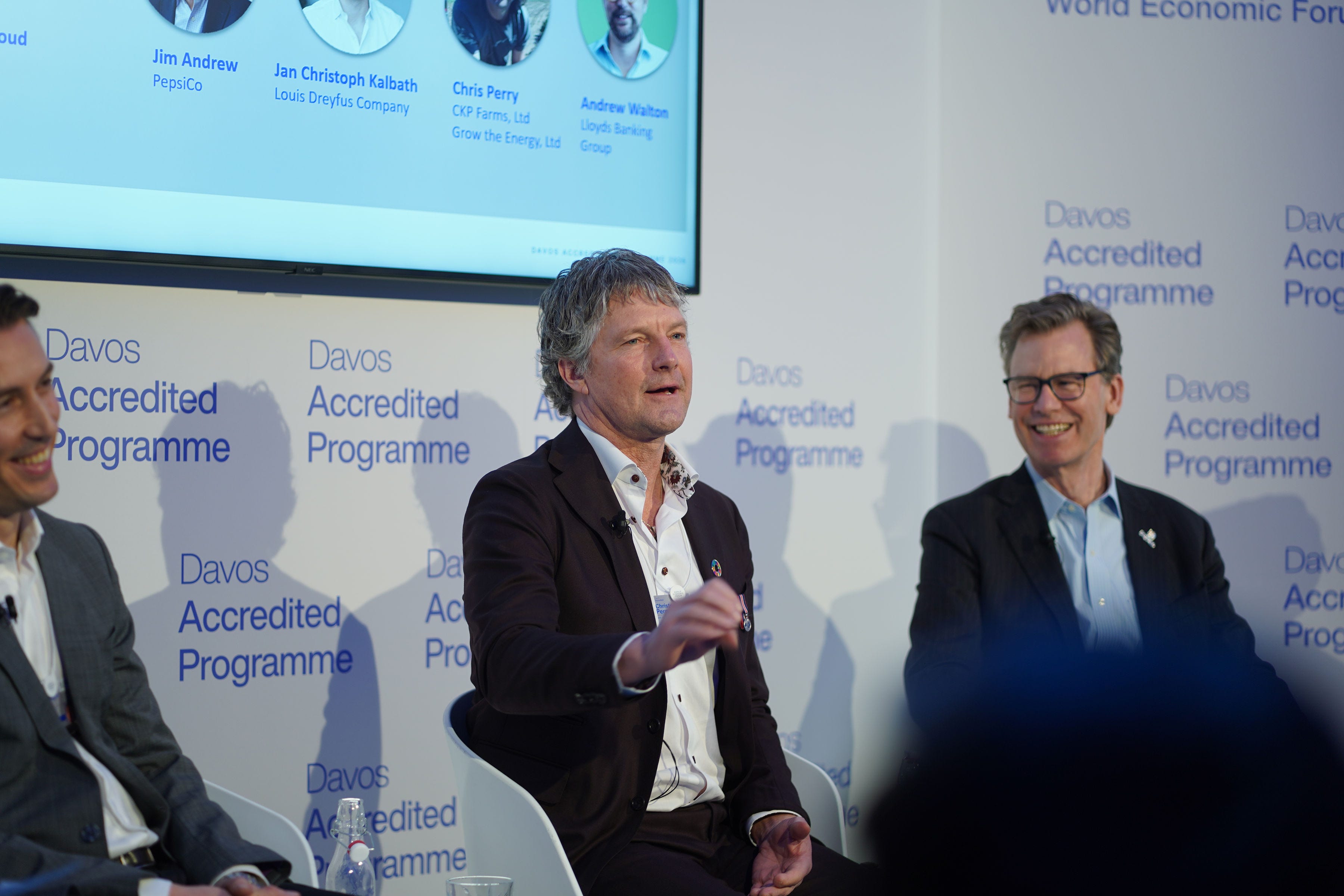
Chris and Jim
8. Human Change
By the time we walked out of Ice Village, I felt like the formal “farmer at Davos” moment was basically done. I had done the thing. I had sat on a panel. I had said what mattered to me about trust, economics, shared risk, pragmatic measurement, and a future where value can move more directly to farmers. I remember that quiet little exhale that comes after you speak in public, like your shoulders finally decide they can drop back down.
In my head, that was the end of the WEF chapter.
It was not the end.
Another realization hit me hard. I was there because PepsiCo invited me. Yes, we’ve built something meaningful on the farm. Yes, GrowTEC and our regenerative work matter. But access like that comes through partnership and alignment. Instead of feeling small about that, I felt deeply grateful. Grateful to Ramon, Maria, Jim, Steven, and the PepsiCo team for believing a farmer voice belonged in those conversations. Grateful that the work Harold and I have poured into the farm, and that so many of you have supported, could be represented on a global stage.
There were big names everywhere. Leaders from Bunge, Nestlé, Syngenta, The Nature Conservancy, Louis Dreyfus Company, Cargill, Nutrien, Yara. I had meaningful conversations about regenerative agriculture, biogas, blockchain, AI, and the future of work. But what struck me most was not the titles. It was the hierarchy. This is a realm of global elites, where people will ask who you saw and met, even though we are all just human.
I walked into Syngenta House and was introduced to Jeff Rowe, the CEO. He was genuinely happy to meet and converse with a farmer at WEF. I was able to meet Greg Heckman, CEO of Bunge, and Taryn Davis, Cargill’s Director of Strategic Partnerships. And the most notable introduction came through Kyra’s old school friend Dr. Phil McRae, who introduced us to Margarita Louis-Dreyfus, billionaire Chair of Louis Dreyfus Company.
Davos made me reflect on bigger questions. AI was everywhere. Panels were discussing how automation may now threaten educated entry level jobs, not just trades. There is a sense that the world is searching for new economic models, new incentive systems, new ways to align business with human dignity and the planet.
And that is where the Lion Monument came back to me. Stewardship over glory.
Davos was exciting. It was humbling. It was inspiring. But it also reminded me that real work happens quietly. On farms. In communities. In families. In long term commitments.
What I did not realize yet is that Davos has a way of widening your frame when you think you are finally narrowing it. The food and farm agenda is powerful, but it is still a lane. Sometimes the most important learning comes from the next door you did not expect to walk through.
That door, for us, was Human Change House.
We only had access because Dr. Phil McRae invited us through Kyra’s connection, they’d gone to school together in Pincher Creek. I walked in thinking I was carrying the same mission I’d taken to the events that I presented at. Same story. Same overlap. Same mental script, just delivered to a different room.
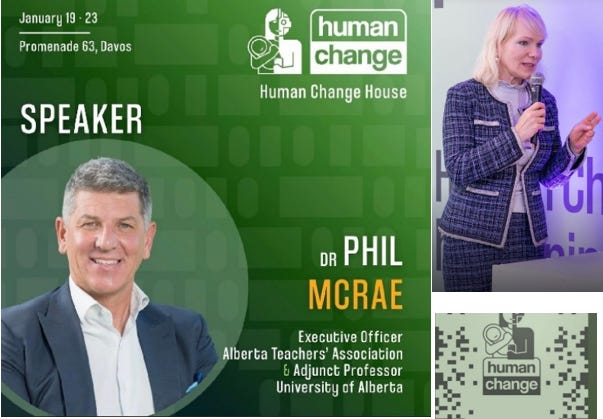
This room had its own energy. Less industry panel, more human systems. It was still Davos. Still high performing people. Still cameras and schedules and badges. But the signal was different. The branding alone said it out loud: human change. Not climate change. Not supply chain change. Not capital markets change. Human change.
Then came the moment that snapped me into stillness.
Phil introduced me to Margarita Louis-Dreyfus. I had done my homework on Louis Dreyfus Company. I had thought through the overlaps. Circularity. Sustainability. Resilience. I was ready to do what I always do when I see alignment. Share the story. Propose a bridge. Start building something practical.
She interrupted gently, but directly, and asked a question that landed like a hammer wrapped in velvet: “Where does human change come into your sustainability sessions and discussions?” It was not a trap. Not a gotcha moment. It was worse, in the best way. It was true. A question that revealed a blind spot I did not know I had.
I remember being genuinely shocked into quiet. Out of my league for a second. My brain, which normally loves to sprint, just paused. In farming, we respect that pause. Sometimes the soil tells you something you cannot argue with. You just have to listen.
That question separated the mechanics from the meaning.
Because the mechanics are the part I can talk about all day. Practices. Outcomes. Measurement. Economics. Risk. Incentives. Data ecosystems. Trust and transparency. Tokens and blockchain as tools to move value and reduce friction. All of it matters.
But her question forced the deeper layer.
Even if we build perfect systems, do people change?
Do they trust?
Do they commit?
Do they become the kind of leaders, partners, consumers, and citizens that can carry the change long enough for it to stick?
Seeing political leadership in that space felt different from celebrity in the room. It was a reminder that these are not just technical problems. They are human problems that show up in public systems, policy, culture, identity, and fear.
It also felt surreal to look around and notice artists and creators in the mix, including Jon Batiste, who delivered the opening concert for the Forum, and his wife Suleika Jaouad, a Tunisian American author and Emmy Award winning columnist for The New York Times. The audience felt different. More present. More willing to sit with questions about humans, not just markets. When the conversation shifts to human change, the room widens by definition.
And this is the part that humbled me.
In my mind, I had come to Davos to represent farmers and food. I still believe that is essential. But in that moment, I realized how easy it is to talk about transformation like it is a spreadsheet problem. How easy it is to skip the hardest part because it is messy, emotional, and slow. Hearts. Habits. Incentives. Pride. Fear. Belonging. Identity. The session we were able to see in Human Change House with Dr. Phil McCrae, Tristan Harris (Social Dilemma) and others truly grounded me in an expanded mindset – thank you Phil!
I left carrying a different kind of question, one that has become a filter for me since:
If we are designing solutions, where exactly is the human in the design?
Who has to change?
What do they give up?
What do they gain?
What scares them?
What do they need to believe?
And what kind of support makes the new behavior realistic in the real world?
That is the touchstone I want to keep from Davos, even beyond the farm and food agenda. The reminder that resilience is not only soil and infrastructure. It is people. It is relationships. It is the inner work that makes the outer work possible.
If I am honest, that might be the most valuable gift Human Change House handed me. It made me realize I can chase the right outcomes and still miss the point if I do not include the human change those outcomes require.
As I write this, Kyra and I are on a train heading toward Celerina to ski in the Alps for the first time together. The Forum is behind us. The mountains are in front of us.
And I am left with this feeling:
I am proud of what we have built.
I am grateful for the opportunity.
And I have a lot more to learn.
From soil to system to snow.
And back home again.
9. The Matterhorn Does Not Care
Somewhere after Davos, after the badges and panels and rooms full of consequence, Switzerland shifted gears. Suits gave way to ski boots. Agendas to chairlifts. Systems to snow talk. We were on vacation.
Corviglia was our first day back on skis. Not the glossy postcard version people imagine when they think “St. Moritz,” but something far more honest. The cloud ceiling sat low and stubborn.
Above the tree line, the world dissolved into white on white. No depth. No contrast. Just skis floating through space with nothing to tell your brain where up or down lived. The kind of light that turns even a gentle slope into a test of trust.
There was poetry in it, though. Rocks poking through the snow like punctuation marks. The occasional intermediate skier skidding past, eyes wide, silently asking the mountain for confirmation that snow still existed beneath their feet. It was disorienting and oddly grounding at the same time. A reminder that control is usually borrowed, never owned.
Paradiso, a typical beautiful Swiss Style restaurant on the mountain enlightened the day. We slid into lunch in the clouds and for a brief, teasing moment the sun made an appearance. Just long enough to show us what Corviglia could be on a true bluebird day. Then it ducked back behind the curtain. A Swiss sense of humor, clearly. After sharing a picture of the moment with family we learned my Ma and Pa sat in near the exact spot at the same Paradiso back in the 1980’s.. cool… cycles… arcs
Below us, St. Moritz buzzed with a different kind of spectacle. The World Snow Polo Championship spread across the frozen lake. Horses, fashion, fur, champagne. The rich at play. We stood out in our hard-core Rocky Mountain ski gear and could not have cared less.
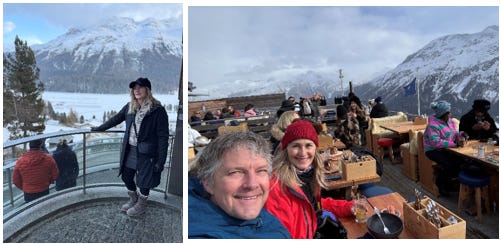
The next day was motion. A long, beautiful train ride across Switzerland. Villages slipping by, valleys opening and closing, the country revealing itself at a human pace. Traveling by train, we sat deep in thought, experiencing the transition. Green trees. Open lakes. Sparkling snow. The kind of travel that resets your nervous system whether you ask it to or not. The glacial garden’s lesson about being present hung in the air.
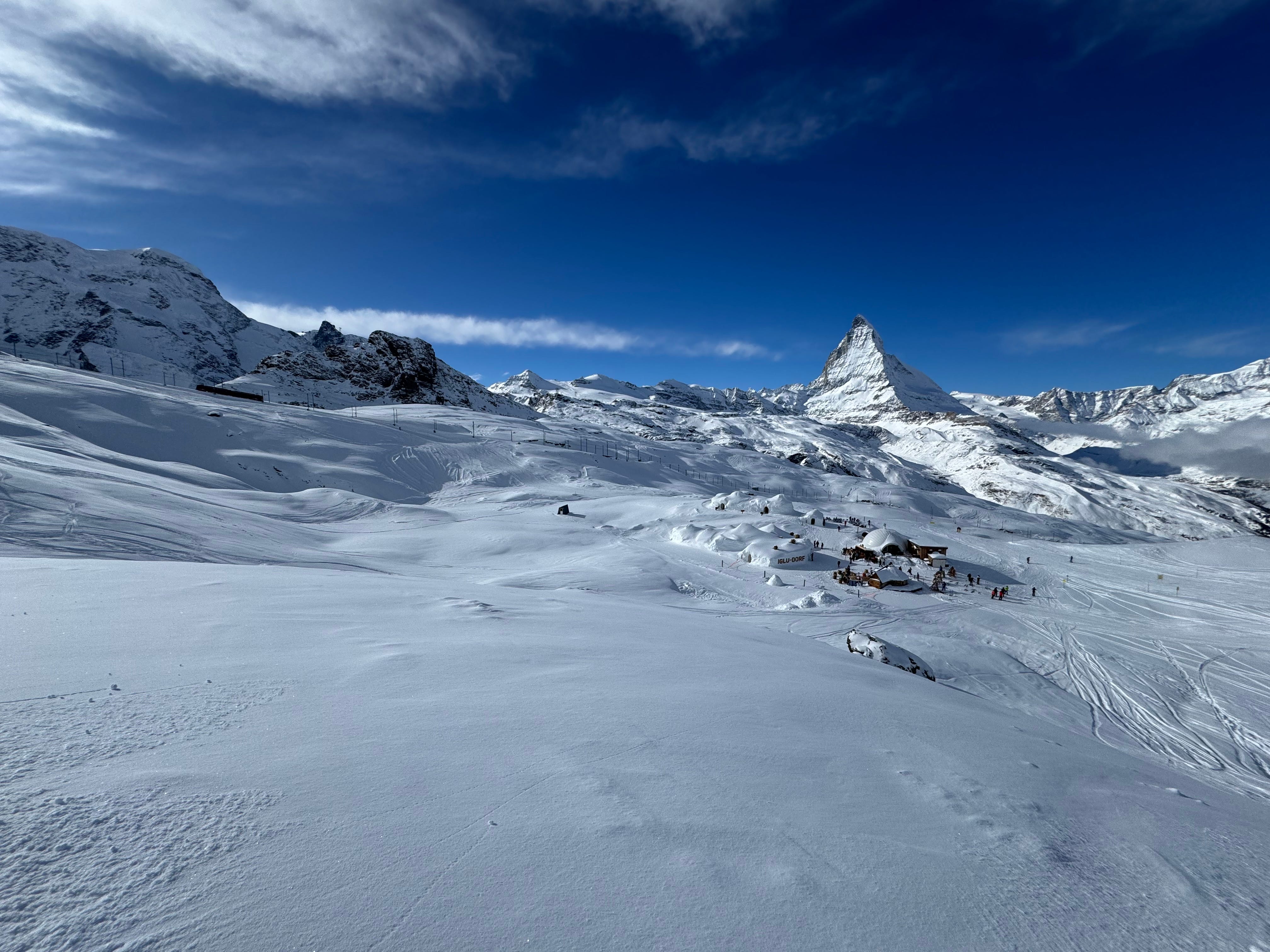
Over seven hours of quiet movement, we entered Matterhorn country. The birthplace of skiing.
That evening in Zermatt, before the mountain reminded me who was in charge, we shared supper with Nigel and Carrol. Friends from our home hill at Castle Mountain. The kind of friends you are grateful to bump into halfway across the world. The conversation picks up exactly as we wish. Curious, grounded, and a little bit conspiratorial, likely not your average Zermatt supper chat.
Carrol had been in Davos during WEF 2023, and she offered a sharp contrast to what we had just experienced. That year, she said, it felt like the Forum was losing oxygen. Flatter. Quieter. Almost polite. Less urgency. Less pull. Fewer reasons for the world’s most influential people to actually show up.
This year was different. You could feel it. Geopolitics had cracked the door wide open. Carney’s speech. Then Trump. Zelensky. Musk. Power. Tension. Consequence. History back in motion. Davos had its edge again.
Over dinner, the conversation drifted easily between worlds. Nigel and Carrol shared what they were building next with Vivent. Technology focused on plant health and diagnosis, working through energy and electrical signals rather than chemistry.
As they explained it, Kyra leaned in, eyes lighting up. The parallels to her world of energy healing and acupuncture were immediate. Different languages. Same principles. Signals. Flow. Listening instead of forcing.
For me, the overlap landed just as cleanly. Data-driven agriculture. Early diagnostics. Translating invisible signals into practical decisions. They immediately understood what I was chasing. Not just better data, but better systems. Better feedback loops. Better outcomes.
By the time plates were cleared, the vacation tone remained, but something productive had formed beneath it. We left with plans to reconnect. Win-win ideas already sketched in the air. Us helping introduce their technology to farmers and influential early adopters. Them helping me think through and maybe unlock pathways toward a co-located supercomputer and data centre vision tied to GrowTEC.
It was one of those evenings that feels effortless while it is happening, and meaningful only in hindsight. No panels. No badges. No urgency. Just good people, good ideas, and the quiet sense that something useful had begun.
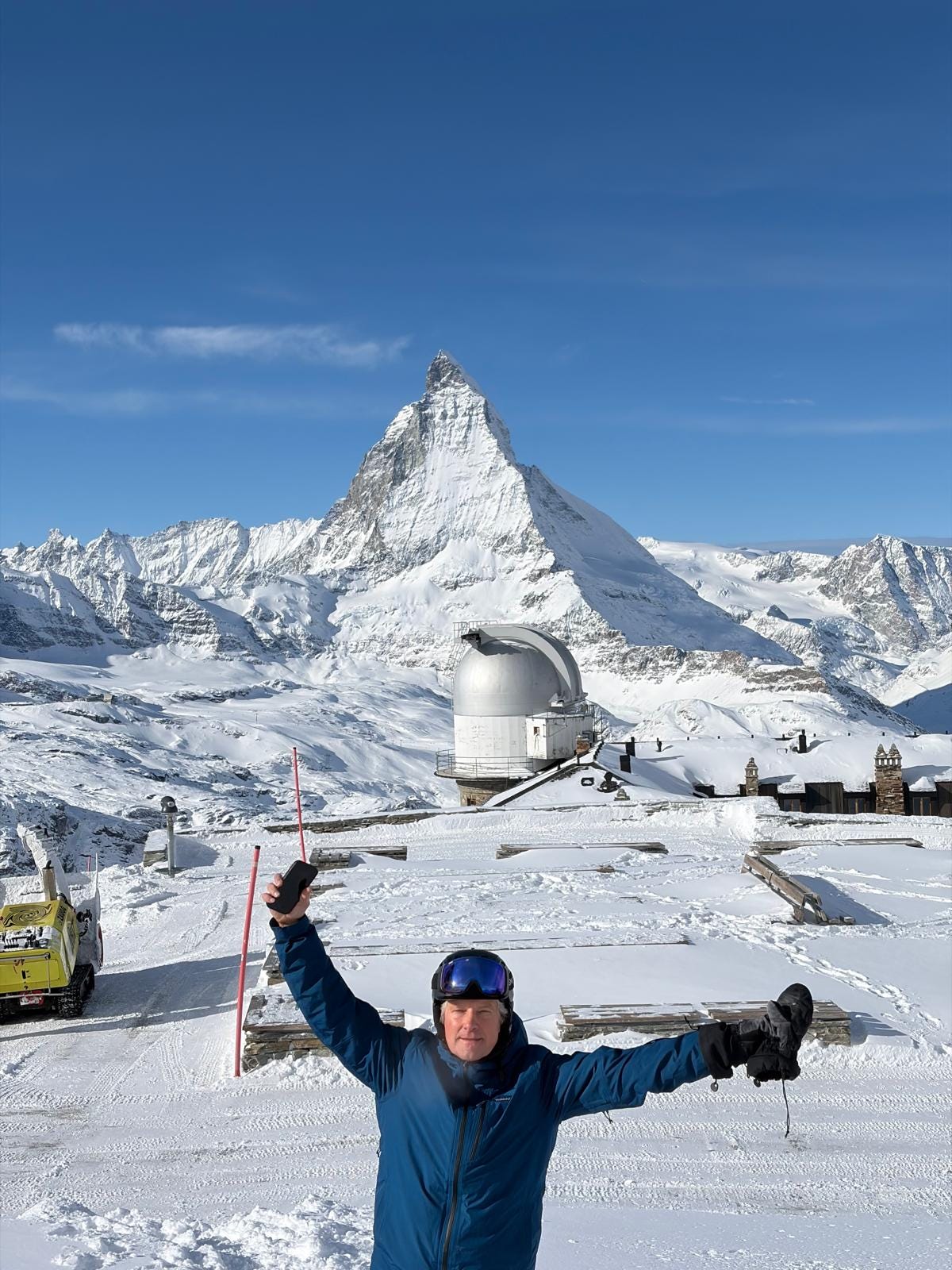
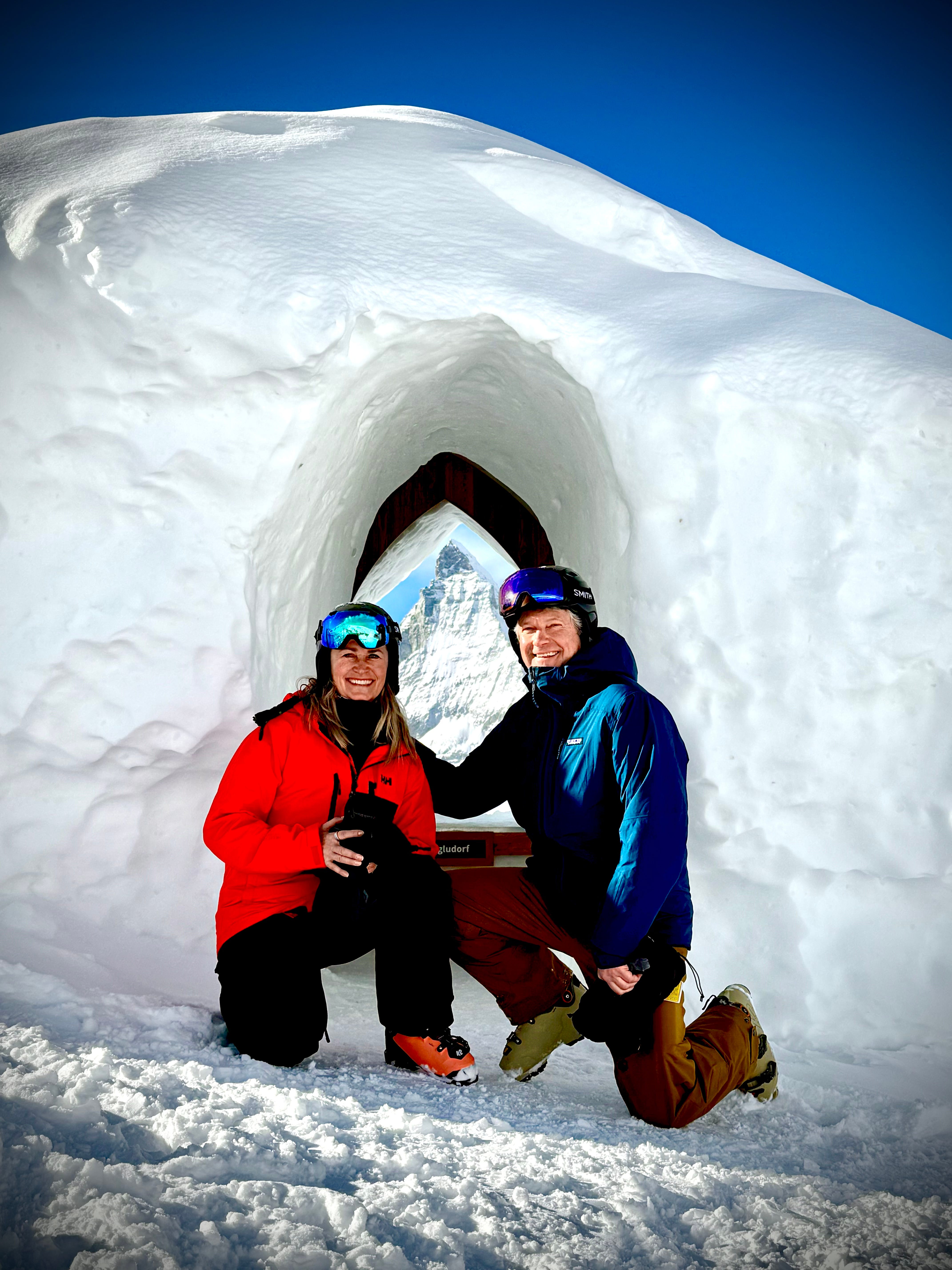
The next morning, Zermatt delivered exactly what it promises. Clear air. Iconic lines. The Matterhorn standing there as a sentient witness. Not impressed. Not impressed easily. Not impressed at all. Watching. Always watching.
We skied. We laughed. Confidence crept back in. The body remembered what it loves to do.
The Matterhorn did not blink.
I dropped into a run that felt utterly reasonable. Wide. Familiar. Nothing heroic. Oh but I WAS ripping! Then, without warning, a rogue Swiss snow snake grabbed my edge. Down I went.
10. Swiss Snow Snake
I broke my left collarbone. On snow I would more closely call icepack. 150% displacement, 5 pieces. Surgery required.
What followed was a few days of waiting, more helicopters than I knew existed, most carrying skiers in worse shape than me, and a mix of frustration and truly excellent care.
Kyra was an absolute rock through it all. Important context: this was the heaviest we have ever packed. Six bags total. Two ski bags. Two suitcases full of formal WEF gear. Two backpacks. Ski boots included. And I was suddenly able to help with exactly nothing. Zero. Sherpa Kyra was very much put to the test.
After the crash around 1pm on some of the hardest snow I have ever skied, curling rink ice included, my 53-year-old bones gave in faster than my pride. I managed to ski myself down, hit the Zermatt clinic for X-rays, then enjoyed a red racing van shotgun ride to Visp Hospital with a driver dressed somewhat like a paramedic, trying to appreciate the mountain views through a haze of pain meds.
Between a fun roommate who had been bitten by his cat and Swiss efficiency, I finally reached the surgical floor 53 hours post crash.
Karma may have prevailed. I had been giving my brother a hard time about his broken leg on the first day of harvest, perhaps even jealous of the attention and hardware. I now have my own hardware — eight screws, a plate, and a few floating pieces — plus a very manly scar.
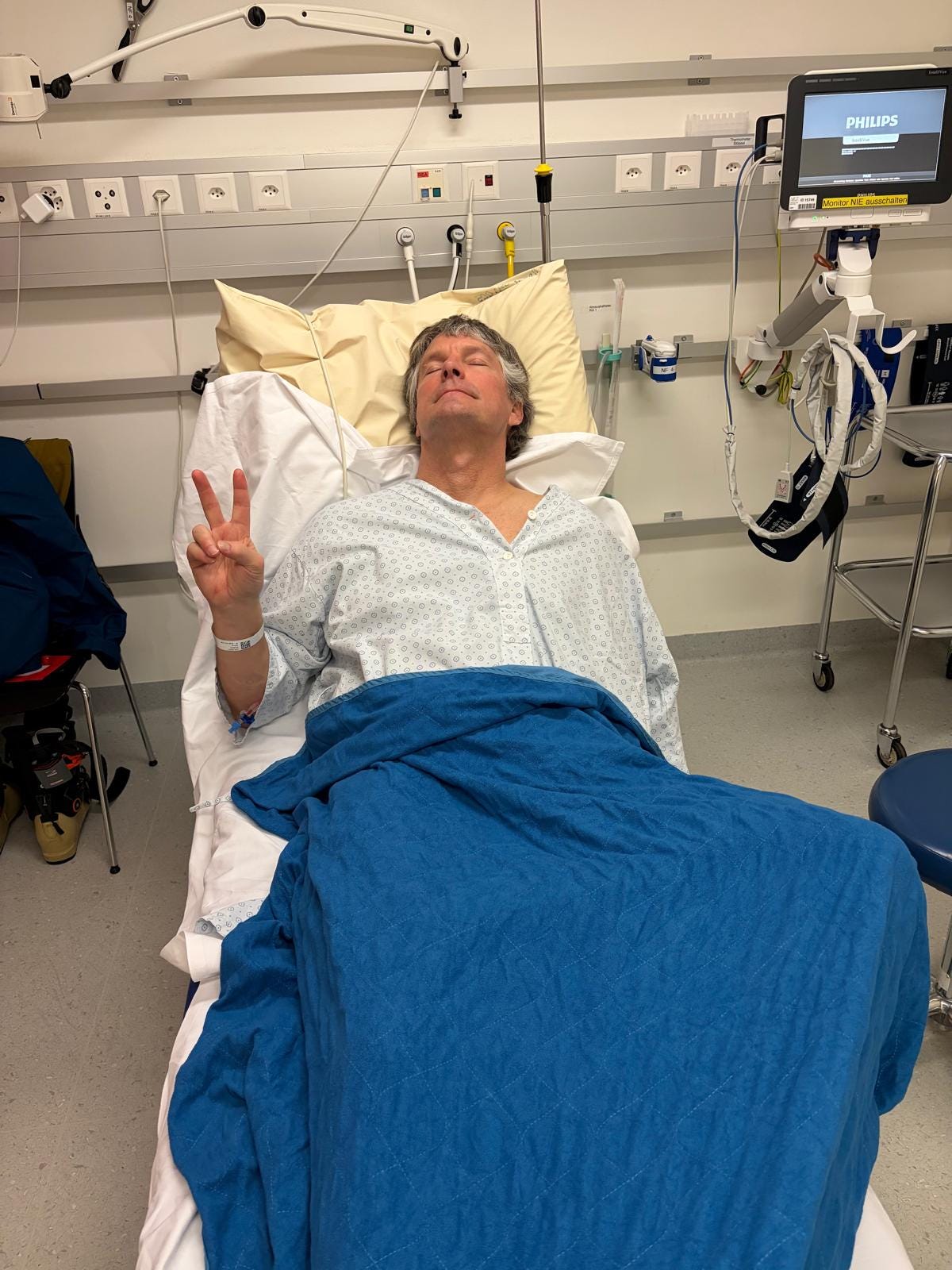

Regardless, I was so relieved after surgery that I immediately started booking flights and hotels, which in hindsight may have been ambitious given the drugs.
Then came the journey home, which became its own full-blown adventure. Released from the hospital around 6pm, we made it to Zurich airport by 9pm, confident we had a hotel. Plot twist. Wrong Hyatt. Possibly booked under the influence.
Cue an Uber back into downtown Zurich to the Hyatt Park and finally collapsing into bed around 11:30pm. At that moment, the Visp hospital bed with the mountain view, Swiss nurses on call, and better drugs suddenly seemed appealing. I had overreached. Kyra carried everything. Love was tested. Love prevailed. We were exhausted and very grateful.
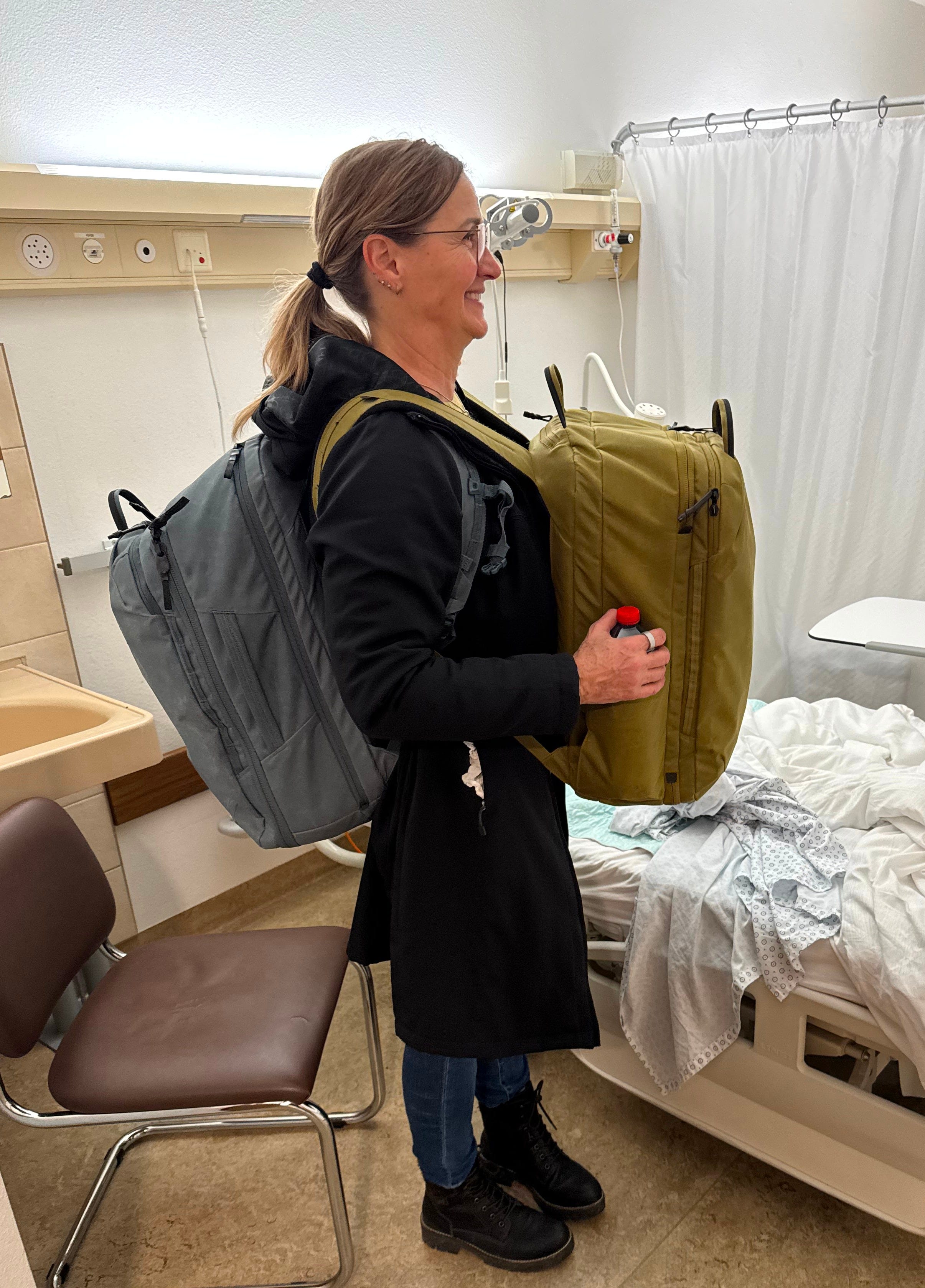
The next morning, up at 6am, we headed back to Zurich airport and had one of the best human experiences ever at the Air France ticket counter. A woman who had clearly had a rough start to her day decided to change her karma, and that kindness landed squarely on us. She personally helped haul our bags from baggage storage and set us up with medical assistance for the Paris transfer.
Absolute legend.
The flight was delayed 1.5 hours. Then came molasses thick fog, a pull up and 20-minute circle before a full auto landing with electronics off. Landing when you cannot see the end of the wing is… exciting?
The delay turned a comfortable 2-hour 20 minute transfer in Paris into a near impossible 30 minute transfer, especially given my state when running was not an option. Without the medical transfer, we would have missed our flight home and enjoyed an unplanned Paris sleepover, or two.
Huge thanks to that Air France angel and the Olympic-ready assistant who sprinted with me, wheels flying, to the private van transfer at terminal 2F. We did not get names, but we are sending gratitude into the universe to those two incredible women. Long haul flight home in a pod, blessed.
We had the warmest welcome from sister KP. Her support, love and offer to help with bags meant the world. The bags did not make it, but honestly that worked out perfectly since they are being delivered and I am limited to lifting 1.5 kg. Sherpa Kyra finally got a break.
To say we were grateful to be home, in our own bed, 2.5 days post surgery, is a massive understatement. Exhausted. Sore. Very happy. Deeply thankful for the kindness, care and support we experienced along the way. Home never felt so good. Trip summary, because it is too ridiculous not to document:
1 Swiss snow snake crash under the Matterhorn in Zermatt
1 broken clavicle
1 ambulance ride from Zermatt to Visp
3 day hospital stay and surgery in Visp
5 Train rides for Kyra back to Zermatt – 1.5 hours each = 7.5hrs
1 train ride Visp to Zurich, wrong hotel, right hotel, airport
1 fog filled flight Zurich to Paris to Calgary
1 drive home from Cowtown to Chin
A lot of kilometres in a short window following a crash, surgery and a determined journey home.
As for work, yes, I may have optimistically told a few people I would be all in the following week. On a wiser note, Kyra firmly said no. She was correct. I took proper recovery time. She is a healer, and I am finally listening.
This pause is allowed me to slow down, to absorb and craft this story for sharing, and think about how I am going to follow up on Davos and make it worthwhile. For me. For PepsiCo. And for the farming world I had the honor to represent on the world stage.
For those interested to continue the read, the next chapter will come. It will be about what’s next. Because what happened in Davos — and under the Matterhorn — does not end with a sling and a flight home. It demands a response. What follows is not story.
It is notes.
processing.
intention.
11. ARCs
This is not polished.
Getting sidelined has a strange upside. You can’t run fast, so you finally think slow. Davos kept looping in my mind until it sharpened into a question: what was that week really about, and what do we do with it now?
Davos was access.
And access demands stewardship.
So what follows is not narrative.
It is movement.
It is fragments.
It is systems thinking colliding with human change.
It is soil meeting system. Snow meeting conscience.
If you chose to join this ride, welcome, note: If you are here for tidy conclusions, this is not that. If you are here for direction, maybe. Let’s think on page.
The World Economic Forum is a gathering of builders and decision-makers. Leaders with real influence, and a lot of criticism following them. It is panels and private meetings, headlines and backchannels, earnest intent and plenty of spectacle. “The Spirit of Dialogue” landed for me as a first timer, maybe an only timer. I went to listen, contribute what I could, and come home with something useful. I went with an agenda. I find myself doing this more.
My sprays of tangential thoughts range around trying to find a system within our global food supply that makes sense. Resilient and regenerative. Circular. Waste limitation and utilization. Natural capital. Pro earth. Generational life and growth. If not here, then where can one find sense of it all?
What are we about on the farm? Mission and vision to leave the soil and the earth in better shape than we inherited it. Is this such a thing? Maybe it is balance.
So much effort at this forum was about people looking for balance and pathways to better. Nature capital. Do something harmful here, balance it with something beneficial over there. Can we truly live off the interest and not the capital of this planet? Is that a thing?
Can our upgrades, our offspring, find their way?
AI was everywhere at the Forum. In session titles, inside conversations, in the quiet anxiety underneath the optimism. A tool, a leap, a replacement, a gift, a concern. For farming, it is also practical: better timing, better irrigation decisions, better nutrient efficiency, better predictions, fewer mistakes. We are a walking dataset out here. The question is whether AI helps farmers or just helps systems extract more from farmers.
Our food supply chain sees such potential. Efficiency of input decisions. Resource optimization. Agriculture is a playground of data. And what is AI but the ability to play with data? In the ground. On the ground. Yet before the official invite to Davos, I was asked: What are your suggestions as a farmer on what key problem sets, we should seek to work through? Broadly relevant. Corporates and civil society to weigh in on. What do you want to explore while in Davos? I had my five core points.
How did it go? Regenerative agriculture has momentum, but definitions are still messy and incentives are still blunt. Risk and reward remain the hard conversation the system avoids. Data ecosystems are improving, but the power dynamics are real, and too often the value flows one way. What surprised me most was how many serious people were circling the same idea: we need a mechanism that rewards farmers for verified outcomes without crushing them in paperwork, time and costs. My points on blockchain and tokenization drew engagement more than I expected, not as hype, but as a possible path to make trust cheaper and incentives real.
So, what’s next?
Join me. Let’s keep the conversation alive. Let’s build trust in the system. Let’s make farming attractive again and draw the next generation into a world where producing food is valued and sought out. Where returns for the risk carried by the primary producer are recognized and rewarded fairly. Where tech, AI, engineering, art, biology and human health collide. Where you can be part of feeding the world.
So again. What is regen ag?
Since my return to the farm in 1999, there have been words and phrase to capture direction.
Soil conservation.
Sustainable agriculture.
Regenerative agriculture.
These words capture direction. They help customers and consumers understand that there is intention behind what we do. Language. Words. Phrases that take life and meaning.
Corporate responsibility.
Environmental reporting.
Food safety and labour standards.
Supply chain risk.
Environmental, Social, Governance. #ESG
ESG became a thing via the UN backed Who Cares Wins initiative around 2005. It grew in social responsibility and by 2015 became necessary in public corporate reporting. At COP 21 in Paris in 2015, I recall this being a positive outcome to force large corporates to include ESG. ESG needed to be included on annual reports and check boxes for publicly traded companies – i.e. all the big ones. Boxes like, environmental benchmarks, goals, and targets. Social goals of treating people fairly inclusive of farmers, safety and community support. Governance models including transparency, honesty, accountable leadership and oversight. For Big Food, this bred terms like Scope 3 emissions, emissions in the value chain not under direct control of the corporation. Farming becomes Scope 3 for PepsiCo.
I like the concept and the trend. At big talks and world forums, these discussions happen. Ideas become actions. Change does take place. It is not all for nothing.
But something is happening now. The phrase that took life in 2005 is failing in 2025.
Political backlash. #Ideological battles.
Big promises that did not deliver expected results. #Unrealistic targets.
Returns that did not correlate. #Investors grow cynical.
Measurement chaos. #Greenwashing accusations.
CFOs pulling control back. #Pushback against ESG investing mandates.
ESG moves from strategy to compliance. #Storytelling becomes checklist.
This is an arc… So I decided to acronym it. ARC
Awareness. The spark. The vision.
Responsibility and Risk. Human and capital.
Codification. Policy. Measurement. Compliance.
Movements begin with passion and intent. They grow. They codify. They tire. Critics abound. The spark fades. The phrase fades. The system remains. Every movement runs an ARC. We change the words but not the system. And then it is ready to be reborn. Regenerated. Regenerative agriculture?
This cycle can be reimagined. It does not need to attempt to solve every world challenge at once. It does not need to burn out under unrealistic goals. Resilience is multi generational. That should stick.
The responsible farmer in the field is simply trying to support the land they steward and produce food for the world. Sometimes there is a better practice for the planet. One that comes at extra cost, additional investment, time and effort. It all adds up. Even at small scale.
So how can we work together to incentivize that inclusion? Cue blockchain and tokens. Blockchain is infrastructure. Not ideology. Not politics. Not crypto speculation. It is a shared, tamper resistant ledger that allows truth to persist without a central gatekeeper. That matters for agriculture because farming happens at the edge of systems, not the center. On fields. In soils. On two acres in India and six thousand acres in Alberta alike.
Blockchain offers the ability to record what happened, verify it and allow value to move directly to the hands that did the work. Evidence. Timestamped. Shared.
Tokenization is where this becomes catalytic. A token is not a speculative chip. It is a receipt for positive action. When a farmer invests time, capital and risk into better practice, building soil carbon and resilience, improving water retention, reducing emissions, enhancing biodiversity, those outcomes can be measured and represented.
Suddenly regeneration is not charity. It is not a promise. It becomes investable. Capital can flow upstream to the primary producer before or guaranteed after. This is the shift from compliance to incentive. From reporting to reward.
And here is what matters most to me. This works at human scale.
Small is not excluded. Small is empowered. When millions of farmers make marginally better decisions that cost something, those costs do not sit alone on the farmer’s shoulders. They are shared across the system that benefits.
Consumers. Corporates. Governments. Capital.
This is how ARC bends back toward awareness without burning the farmer in the middle. This is how regen ag stays alive, not as a word, but as a living system.
We do not need another phrase.
We need a mechanism.
One that rewards courage, patience and stewardship.
That is the opportunity in front of us.
This is the invitation.
Small is beautiful. The decentralized system has potential to reward small players doing great things.
We need to get this in play. Mostly right. Into a trusted sphere of action. Farmers should be a part of this conversation… I am willing to be part of that conversation in the best interests of farmers around the world willing to invest in best practices for the interests of all.
**************************
And now the resolve. I owe follow up.
To Jim.
To Ramon.
To Caroline.
To Jenny
Who leaned into the token discussion. That conversation cannot sit in a notebook. If I want to be invited back into rooms like Davos, I cannot return with stories alone. I must return with structure. With pilots. With proof.
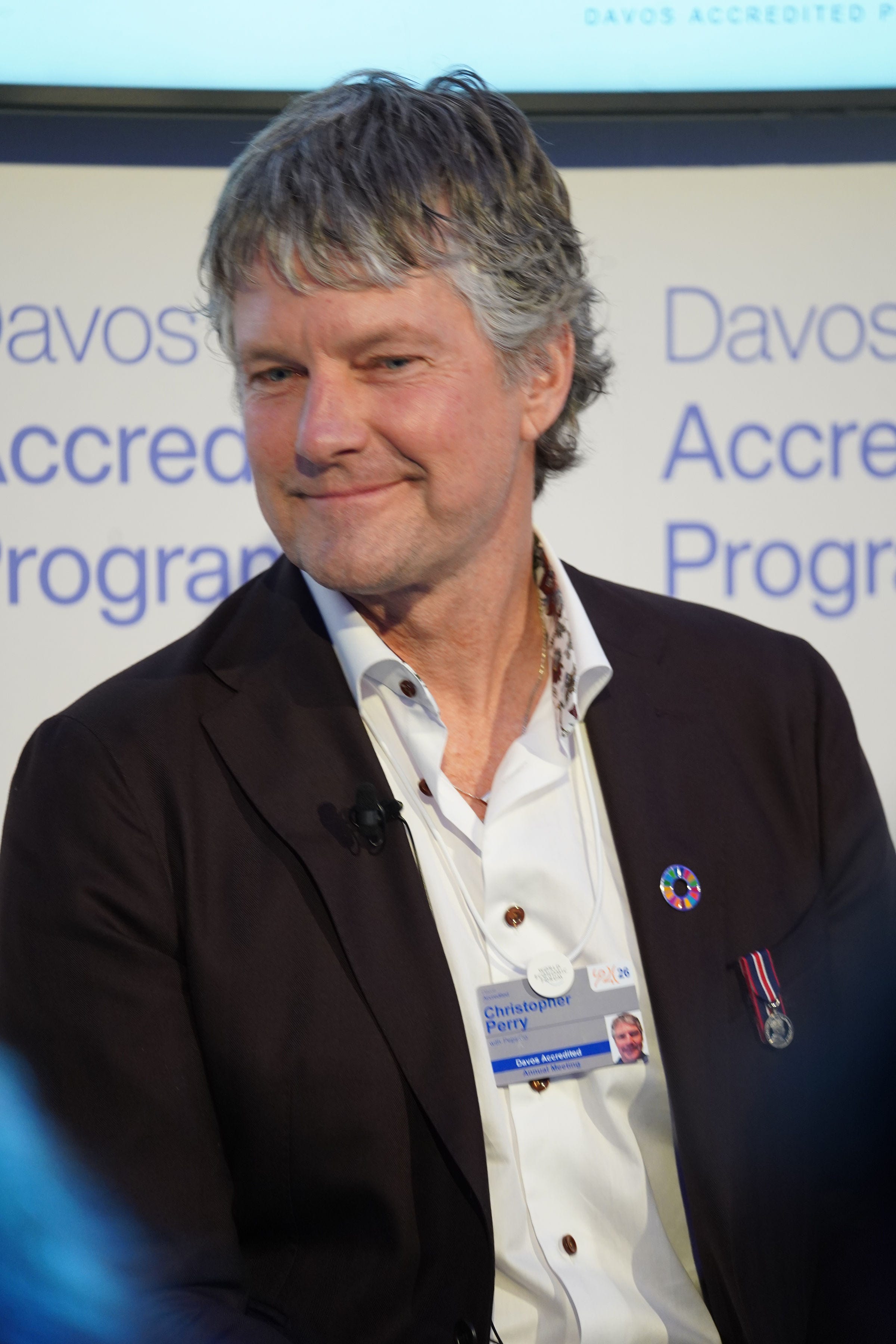
From healthy soils
to human systems
and back home again.
The Lion in Lucerne was wounded but steady.
Stewardship over glory.
That feels like the right posture now.
The work continues.
Thanks to Sherpa Kyra and her love and support ALWAYS!
and a special nod to Kara for helping me edit this story.
Chris, if you decide not to be a farmer you can become a full time writer!!! Delighted to dig into your reflections and learnings from Davos. Haver to agree that real change is always hard and a bit messy and about people. Thank you very much for sharing your thoughts, your time and your friendship.